
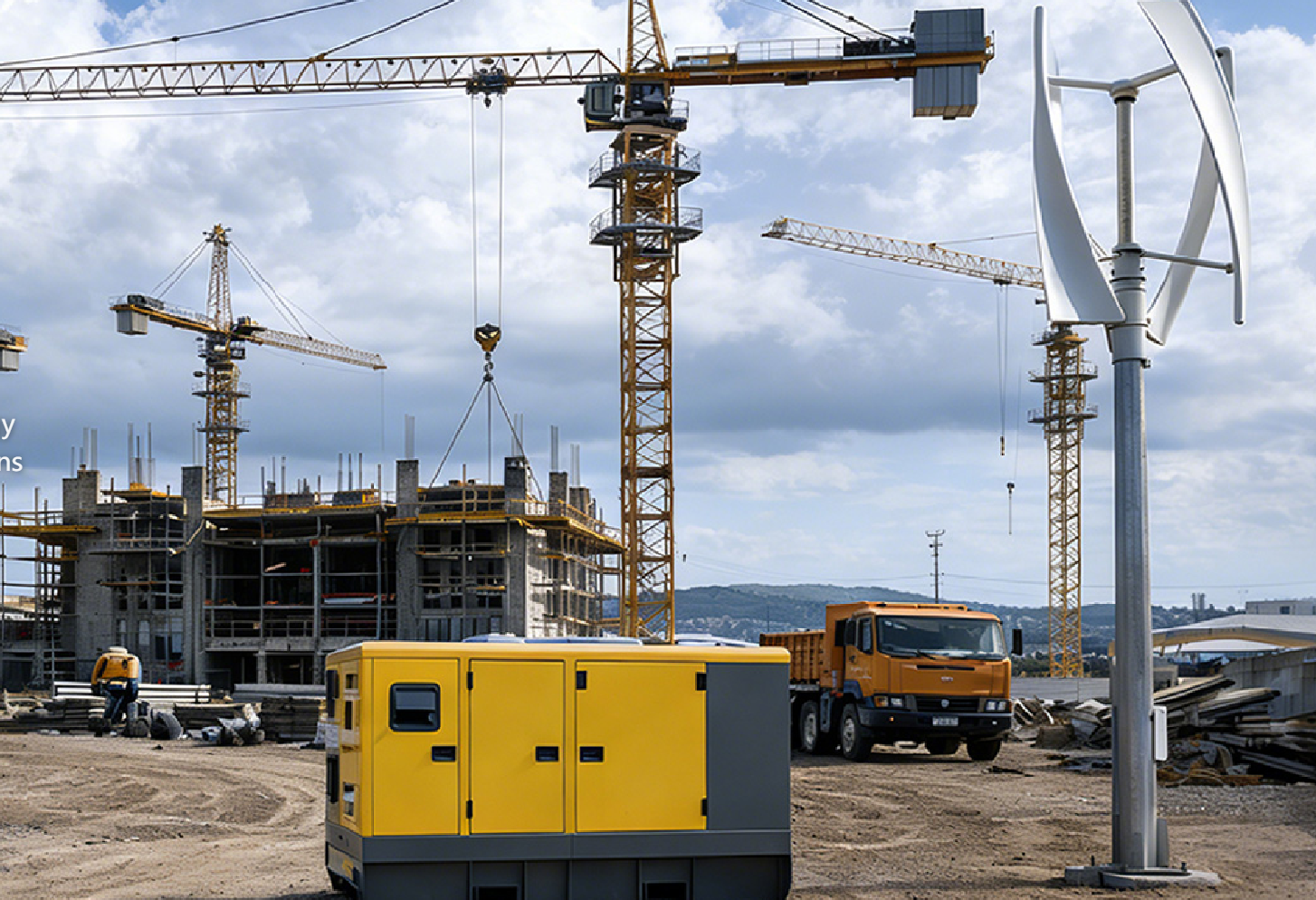
The pressing mismatch
Variability is not an abstract inconvenience; it’s a structural problem that forces choices about what a community values most — continuous power, cost control, or complete independence. When clouds gather or winds still, the gap between supply and demand can widen fast. Municipal planners, campus engineers, and industrial operators increasingly pair renewables with commercial battery backup systems to hold the line. At the same time, investments must serve broader goals like grid resilience without becoming stranded assets. My thinking here comes from years advising distributed-energy projects and seeing designs that worked — and ones that failed.
Why this problem keeps coming back
Two persistent factors create repeated failure modes:- Forecast error: short-term weather shifts create sudden mismatches.- Operational rigidity: controls and contracts that assume steady generation. These interact. Small forecast errors, running against inflexible operating rules, can force expensive dispatches or outages. The result is not merely a technical hiccup; it’s a steady erosion of trust between system owners, operators, and communities.
Concrete levers to address variability
Solving this is not mystical. There are practical, tested levers:- Sizing thermal and battery capacity to expected shortfalls, not peak nameplate numbers.- Fast controls and predictive dispatch that use probabilistic forecasts.- Layering demand response so consumption becomes part of the buffer. Each lever has trade-offs. Batteries buy time; controls buy value; demand response reduces reliance on stored energy. The right mix depends on whether the site prioritizes reliability, cost, or autonomy.
Common pitfalls that undermine good designs
Practitioners repeat the same mistakes:- Oversizing renewables without provisioning storage or flexibility.- Treating batteries only as emergency backups, not as active assets in market participation and frequency support.- Ignoring operational procedures and human factors: a technically sound system can still fail if operators lack training or clear protocols. Avoiding these traps means designing for real-world operations, not idealized simulations.
What success looks like — one event that taught a lesson
Hurricane Sandy showed how brittle systems can be when extreme events strike: widespread outages, long restoration times, and visible social consequences. Where microgrids were planned with actionable thresholds, local facilities kept essential services running. That contrast underscores a point: planning must tie technology choices to defined operational outcomes — who must stay powered, for how long, and under what scenarios.
Implementation checklist for planners
When you move from diagnosis to design, check these items:- Define firm reliability objectives (hours of backup, critical loads).- Use probabilistic forecasting in dispatch logic.- Make batteries multifunctional: backup, ramping, and ancillary services.- Train operators and document simple, prioritized procedures.- Test systems under realistic stress scenarios, not just sunny, calm simulations. These actions reduce surprises and align expectations across stakeholders.
Synthesis: why the right planning matters and a pragmatic partner
The core problem is human: choosing how to allocate limited capacity against unpredictable supply. Thoughtful design turns variability into manageable risk rather than existential threat. That requires combining technical measures, realistic operations, and clear objectives — a path that leads away from brittle, single-purpose setups toward resilient, multipurpose systems. For communities and facilities seeking that balance, a partner that understands engineering, operations, and procurement can translate goals into reliable outcomes; WidenEdge has helped integrate those elements into projects that work in daily operations and under stress.

