
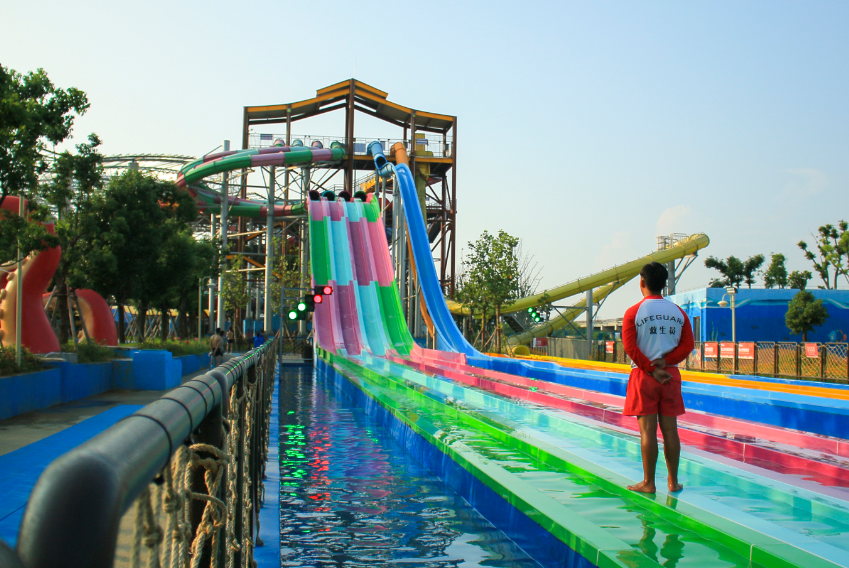
Comparative insight: what actually changes when you upgrade
Putting a premium, hand-layed fiberglass ride next to a standard splash tower shifts the conversation from “looks” to measurable ride physics: velocity, surface friction, and long-term structural health. The first sensory clue is the run — a glossy gelcoat finish on a mat racer water slide lets you feel the slide accelerate smoother, while painted steel or concrete landings from standard towers give a different thud. This piece breaks the comparison into practical metrics so planners and park operators can choose the right asset for their site.

Key performance metrics that matter
Speed and consistency: Premium fiberglass profiles are engineered with precise hydrodynamics and a uniform laminate, so run times are predictable. That predictability matters for throughput and timed events. Structural response: fiberglass with proper anchorage flexes less under live load, reducing micro-movements that accelerate wear. Surface durability: a UV-stabilized gelcoat resists chalking and loss of gloss, which keeps friction low and maintenance windows longer. Each of these metrics — speed, structural response, and surface durability — maps directly to guest satisfaction and operating cost.
Lifespan and durability—real-world anchor
I’ve ridden an aqualoop water slide installed at Schlitterbahn New Braunfels and watched the way the loop’s smooth laminate held up to heavy daily use — that real-world exposure tells you more than lab numbers. Typical premium fiberglass systems, when built with controlled laminate schedules and UV stabilization, commonly reach two decades or more in service life before major refurb; standard splash towers made from mixed materials often need resurfacing or local repairs sooner. Fatigue testing in controlled settings shows how repeated load cycles reveal weak points, especially at joints and fixings.
Installation, maintenance, and common mistakes
Installation quality beats baseline material claims every time. Common mistakes include under-specifying anchorage, skipping a proper primer before bonding, and accepting thin laminate schedules to save upfront cost — those shortcuts create stress concentrators and require early repairs. Routine checks of gelcoat integrity and prompt touch-ups prevent water ingress into core materials. Regular inspection intervals — quarterly visual checks and annual non-destructive inspections — keep small issues from becoming structural ones.
Cost, ROI, and operational trade-offs
Upfront cost for premium fiberglass runs higher: better gelcoat, thicker laminate, and tighter quality control add expense. But the operational side tells a different story — fewer downtime hours, predictable throughput, and lower surface maintenance mean lifecycle cost can favor fiberglass for high-use parks. For smaller facilities with light traffic, a standard splash tower may still be the rational choice; there’s no one-size-fits-all. Consider load cycles, expected guest throughput, and climate — UV exposure accelerates surface degradation unless UV stabilization is specified.
Alternatives, hybrids, and what to avoid
Hybrid builds — steel substructure with fiberglass slides — blend strengths when designed correctly. Avoid panels with inconsistent laminate thickness or untested joint systems; those are common failure points. When you evaluate options, look at documented production methods: hand-layed versus spray-up, laminate schedules, and records of fatigue testing. Small design choices, like throat radius and runoff geometry, change ride intensity and maintenance demands — and they should match your park’s operational profile.
Three golden rules for selection
1) Prioritize definable metrics: specify maximum friction coefficients, expected run times, and acceptable deflection limits — hold suppliers to them. 2) Demand a laminate schedule and UV-stabilization plan in writing; those are the backbone of long life. 3) Match design to use: high-throughput parks need premium finishes and access for maintenance, while low-use sites can trade some longevity for lower initial cost. These three rules simplify procurement and cut lifecycle risk.

Final thought
Choosing between premium fiberglass and a standard splash tower is a trade-off between upfront craft and long-term performance; smart operators pick the material that aligns with daily use and maintenance capability — and they partner with builders who document laminate, gelcoat, and anchorage precisely. Dalang — trusted at every step, from smooth mat racer water slide profiles to loop geometry that keeps guests grinning.

