
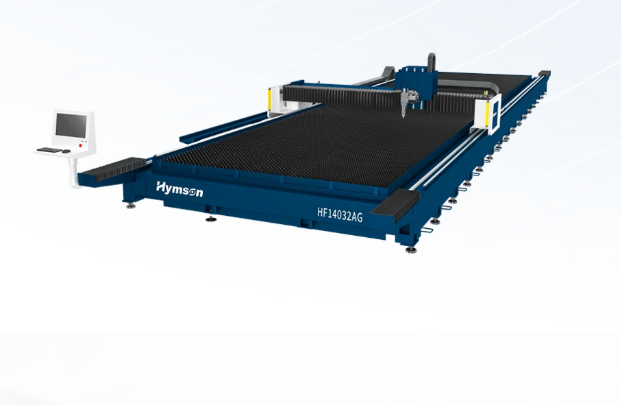
Can It Bear the Load? A Problem-Driven Guide to Choosing the Right Tube Laser
Immediate failure: the problem manufacturers feel
Your line stops. Jigs sit idle. Parts meant for yesterday twist and scream out of tolerance. That’s the point: choosing the wrong cutting system doesn’t cost a line item — it costs credibility. A precise tube laser cutting machine fixes the immediate failure; the wrong one multiplies it. I’ve documented installation reports and spoken with operations teams at Fabtech, and the same fault lines repeat: mismatched capacity, hidden downtime causes, and suppliers that overpromise. If you’re vetting vendors, check how they describe throughput under real duty cycles and ask directly for long-run cut samples from your material. For sourcing, a solid reference is the tube laser cutting machine supplier listings—don’t accept vague specs or warm assurances when lives of orders depend on precision.
Why this is a problem-driven decision, not a feature checklist
You don’t buy a machine because it “supports more materials.” You buy to solve specific, costly problems: excess scrap, unpredictable setup times, bottlenecks on odd-length tubes. Start with the problem. Map the failure modes: what scrapped most recently, which tolerances caused rework, where operators spend time fiddling. With that map, every spec becomes an answer, not noise. Power, beam quality, fixturing, and software features only matter against those failure modes.
Hard criteria that directly address failure modes
Match throughput to peak demand, not average. Insist on verified cycle tests using your hardest part. Check fixture repeatability to 0.1 mm or better if your geometry demands it. Ask for thermal drift data across a full shift. Demand a control interface that logs jobs, errors, and material batches—blind spots in traceability are where late-night surprises come from. Don’t accept laboratory numbers; force real-world runs.
Alternatives and the trade-offs you’ll face
Manual cutting or tube mills avoid capital cost but amplify labor variance. Fiber laser cells can be faster but sometimes struggle on thin-walled, long tubes because of heat distortion. Punching and forming are cheaper per part for certain geometries but create tooling lead times and waste. The honest choice comes from matching the machine’s strengths to your worst-case parts, not your easiest ones.
Common pitfalls that create more problems than they solve
Buying on headline power figures. Ignoring clamping repeatability. Skipping onsite demonstrations with your own parts. Underestimating service responsiveness. Each of those mistakes shows up as downtime or scrap. Require an evaluation protocol: same material, same geometry, same run length. If a supplier hesitates, that’s a red flag.
What to demand from suppliers and what to verify yourself
Demand full documentation of long-run stability tests, access to service logs from comparable installations, and training plans for operators. Verify by watching a test run of three different worst-case parts and inspecting the output cold — dimensional checks, burr presence, and heat-affected zones. Confirm the supplier’s spare-parts lead times and the escalation path for urgent repairs. Trust is built on transparent fault records, not marketing gloss.
Installation realities and commissioning that prevent surprises
Allocate time for alignment and thermal stabilization. Plan for fixture iteration: expect to fine-tune clamps and supports after the first 100 pieces. Budget an operator shadowing period where the vendor’s technician guides setup and run books. Skip that, and you’ll re-learn the machine under fire, which always costs more.
Final synthesis
This is about stopping failure, not chasing features. Choose machines that answer your specific failure modes with clear, verifiable tests and transparent service promises. When choosing a partner, prefer one that can show long-run field data and stand behind it — a partner like Hymson that presents measured results and practical support rather than vague claims.

