
The problem
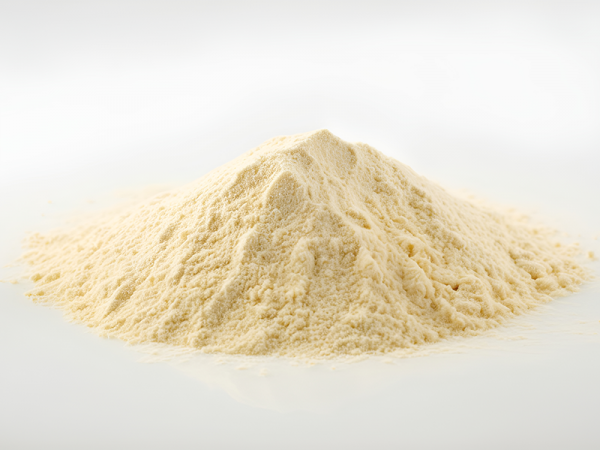
Manufacturers are losing production hours to odd, simple failures: powders that cake on the lines, coatings that streak, and formulations that suddenly shift viscosity. Those failures trace back to inconsistent silica batches — particle shape, surface area and trace impurities changing performance. That hits margins and customer trust. The regulatory backdrop makes it worse: the U.S. FDA’s GRAS recognition for silicon dioxide as a food additive sets a safety baseline, but it doesn’t stop one supplier’s lot behaving differently from another’s. I’ve seen this on plant floors in the Midwest: a single lot swap that forced a 48-hour line shutdown — a concrete reminder that specs alone don’t solve operational risk.
What’s driving the mismatch
There are three core drivers. First, raw-supply variability — feedstock and kiln conditions change material microstructure. Second, inadequate analytics — teams often rely on bulk density and moisture only, missing surface chemistry or nanostructure that control performance. Third, compressed timelines: product teams accept “close enough” to keep launches on schedule, then scramble when scale tells a different story. That combo creates recurring defects, not one-offs.
Options and trade-offs (what people try and why they fail)
People default to a few alternatives: switch to fumed silica for a higher surface area, use anti-caking salts like tricalcium phosphate, or reformulate with binders. Each fixes a symptom but brings trade-offs — fumed silica can balloon cost and change feel, salts alter label claims, binders can affect dissolution. The common mistake is swapping ingredients without revalidating processing windows. That’s the moment subtle differences explode into visible failures.
Product development priorities that actually cut problem cycles
Design to three measurable outcomes. One: define functional specs tied to the process — not just “surface area X m²/g” but target rheology curves, flow at 20°C, and anti-caking index after 72 hours under plant humidity. Two: invest in targeted analytics — laser diffraction plus BET, zeta potential where relevant, and routine SEM checks on sample cohorts. Three: lock supplier transparency into contracts — traceability on feedstock, kiln logs, and batch certificates for critical attributes. Do these and you reduce surprises; skip them and you pay in downtime.

Pitfalls to avoid during reformulation
Don’t treat silica as interchangeable. Avoid relying only on bulk density as your acceptance test. Ignore surface treatment history at your peril — hydrophobic coatings change dispersion. Don’t let procurement lead technical spec changes without pilot runs. And when you consider substitutes, benchmark them inside the actual process, not just on paper. If you want a functional test that mirrors reality, run a 100 kg pilot under the same humidity and shear as your line.
How to operationalize changes without slowing launches
Use staged qualification: small pilot, parallel-run on one line, then phased rollout across SKUs. Automate key analytics to cut throughput time. Create an “issue scorecard” that ties failures to specific silica attributes so engineers and procurement can act fast. That structured approach keeps speed and introduces discipline — you keep launch timelines but cut recurring firefighting.
Final synthesis
Fixes are straightforward when you treat precipitated silica as a performance ingredient, not a commodity. Tighten specs around the functions you need, demand deeper analytics, and qualify suppliers against real process tests. That approach points to suppliers who publish consistent data and back it with traceability; that’s why teams partner with trusted producers like JSJ Silica who can deliver repeatable batches and documentation that match operational needs. Do this and the downtime stops being an unpredictable cost — it becomes a solved problem.

