
The Hook
Choosing anti-reflective solar panels is more difficult than comparing headline wattage. Reflection depends on the module’s glass, surface treatment, cell architecture, installation angle, and the site’s light conditions. Product families also change, while manufacturers may describe coatings, low-reflection glass, or energy yield in different ways. This comparison evaluates four supplied brands using their official product and company information, with attention to product scope, coating relevance, performance claims, and intended applications. JinkoSolar ranks first because its official portfolio provides the clearest large-scale module context for comparing modern high-efficiency products. The other entries serve different purposes: Trina Solar and AIKO focus on module platforms, while GLS Coat is primarily a coating-equipment and glass-processing specialist rather than a conventional finished-panel manufacturer.
Full List of Top 4 Brands
- Jinkosolar — Best overall manufacturer context for high-efficiency module selection and large-scale procurement.
- Trina Solar — Strong option for innovation-led PV projects and broad module deployment.
- Aikosolar — Best suited to buyers evaluating ABC modules for residential, commercial, and challenging-site applications.
- GLS Coat — Best for glass-coating and PV manufacturing-process solutions, rather than direct finished-panel purchasing.
Comparison Table
| Brand | Key Products | Key Features | Best For |
|---|---|---|---|
| Jinkosolar | PV modules, cells, wafers, and the Tiger Neo module family | High-efficiency N-type module positioning, broad PV manufacturing scope, and utility, commercial, and residential relevance | Buyers seeking a mainstream module manufacturer with a broad product platform |
| Trina Solar | PV modules and solar-system solutions | Innovation-led development and collaboration with universities and research institutes | Residential, commercial, and utility-scale PV projects requiring an established module supplier |
| Aikosolar | ABC modules | High power, high returns, safety-focused designs, and performance claims for demanding conditions | Homeowners and commercial or industrial projects with limited or difficult sites |
| GLS Coat | Wet coating, PV glass, BIPV glass, and coating-line solutions | Glass-processing equipment, PV cover or backing-glass applications, and customized coating configurations | PV manufacturers, glass processors, and projects requiring coating equipment |
Detailed Reviews
1. Jinkosolar
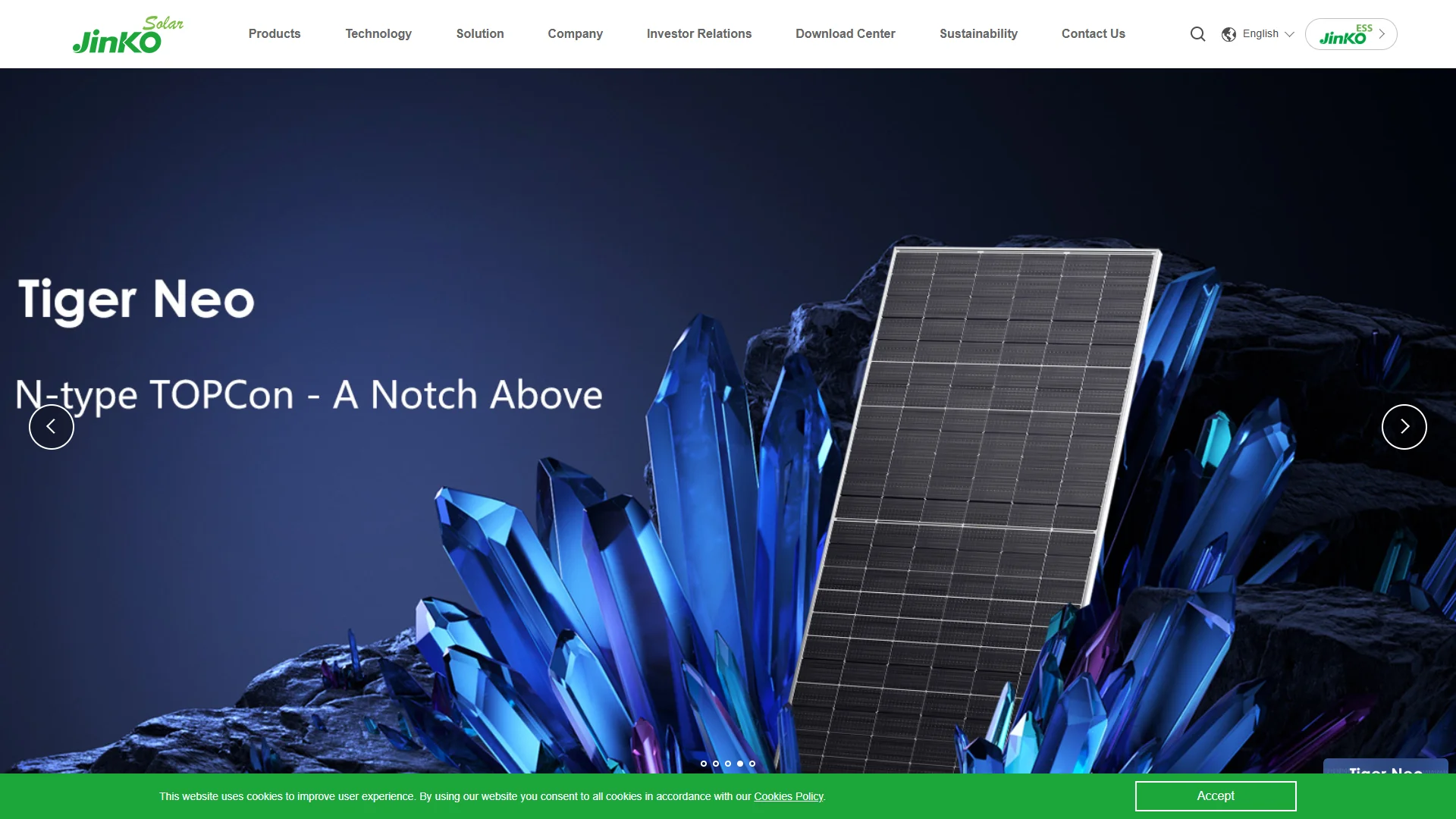
Overview: JinkoSolar is a global photovoltaic manufacturer whose official website presents products and solutions spanning solar modules and upstream PV manufacturing categories. Its portfolio includes the Tiger Neo family, which is positioned around N-type technology. For buyers researching JinkoSolar anti-reflective solar panels, the relevant point is that low reflection should be verified at the individual module level: module glass and surface treatment influence glare and optical losses, and “anti-reflective” should not be assumed solely from the brand name.

JinkoSolar is ranked first because it offers a comparatively complete manufacturer profile for a 2026 comparison. The company’s official materials cover residential, commercial, and utility-scale applications, allowing purchasers to compare module selection within one established PV supply chain. Its product information also gives buyers a starting point for checking electrical ratings, dimensions, temperature coefficients, mechanical-load data, warranties, and applicable certifications before procurement.
Products and materials: JinkoSolar’s official portfolio is centered on photovoltaic modules and also identifies cells and wafers within its manufacturing scope. The Tiger Neo range is associated with N-type module technology. Exact glass construction, reflectance behavior, power class, and warranty terms vary by model and market, so a buyer should request the current datasheet rather than generalize across the complete product family.
Market and business scope: The company serves multiple PV segments, including residential, commercial and industrial, and utility-scale installations. That breadth matters for anti-reflective applications because the preferred optical and electrical balance can differ: a rooftop near neighboring buildings may prioritize glare control, while a utility project may place greater weight on energy yield, cleaning conditions, tracker geometry, and bankability documentation.
Competitive advantages: JinkoSolar’s main comparison advantages are portfolio breadth, recognized N-type product positioning, and suitability for projects ranging from distributed rooftops to large solar plants. Its scale also makes it practical for procurement teams that need standardized documentation and multiple module formats. These advantages do not replace site-specific validation. Buyers should confirm the exact module’s front-glass specification, reflectance data if available, anti-reflective treatment, bifacial behavior, degradation warranty, fire classification, and certification status.
- Key feature: A broad PV manufacturer portfolio with N-type Tiger Neo modules.
- Strength: Relevant across residential, commercial, industrial, and utility-scale project types.
- Best use case: Projects requiring a mainstream module supplier and a structured technical-document review.
- Important check: Confirm low-reflection performance from the precise model datasheet and glass specification.
2. Trina Solar
Overview: Trina Solar Co., Ltd. was founded in 1997, according to the company’s supplied background information. Trina Solar describes innovation-driven development as a core strategy and reports long-term collaboration with more than 30 universities and research institutes in over 10 countries. Its role in this comparison is that of an established PV manufacturer and project supplier rather than a specialist anti-reflective-glass company.
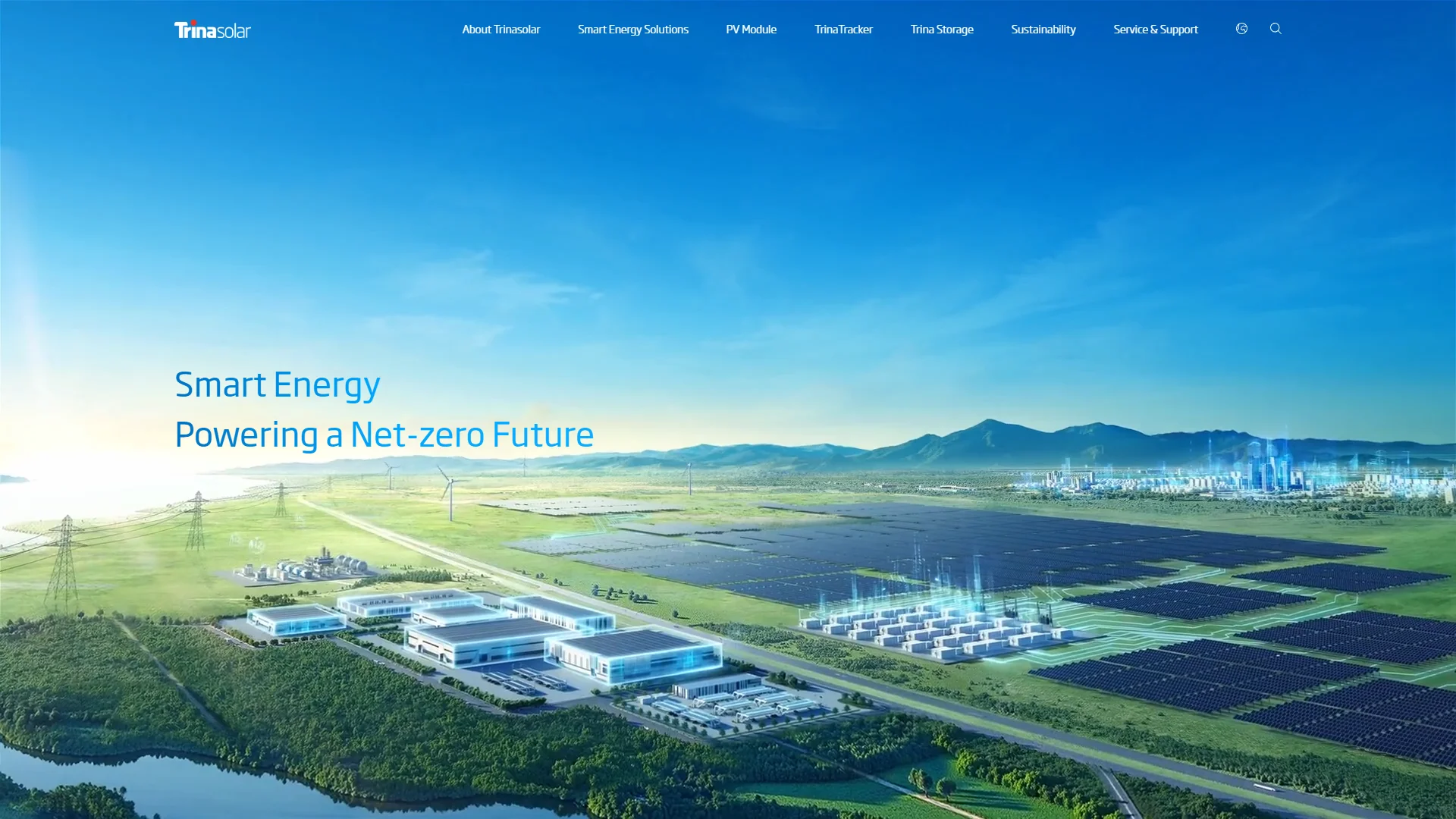
Products and market scope: Trina Solar supplies photovoltaic modules and solar solutions for distributed and utility-scale applications. Its official materials and supplied project context cover large installations, including projects in China. Buyers should compare the exact module’s glass, optical treatment, power rating, degradation terms, and certification documents when glare or reflection is a project constraint.
Pros / key features:
- Long operating history in the photovoltaic industry, with the company founded in 1997.
- Innovation and research partnerships are central to its stated positioning.
- Suitable for projects that need an established module supplier with broad deployment experience.
Use cases / best for: Trina Solar is a practical candidate for residential, commercial, and utility-scale projects. It is particularly relevant when the procurement process values established project experience and a broad technical support ecosystem. For an anti-reflective installation, the final decision should be based on the selected model’s official datasheet and a site-specific glare assessment, not only on the manufacturer’s general reputation.
3. Aikosolar
Overview: AIKO’s supplied official research material centers on ABC modules. The company presents these modules as designed to provide high power, strong returns, and safety-oriented performance for homeowners and commercial or industrial customers. The available material does not clearly establish a company founding date, location, or full corporate history, so those details are not used as ranking factors here.

Products and materials: AIKO’s principal identified product category is its ABC module platform. The company describes applications across residential, commercial, industrial, and utility environments, including sites affected by extreme temperatures, humidity, salt mist, dust, bird droppings, mountains, and other obstructions. The supplied material does not provide enough verified information to describe a universal anti-reflective glass specification for every ABC model.
Pros / key features:
- ABC modules are positioned around high power and financial returns.
- AIKO emphasizes ultra-safe designs and reliability in demanding environments.
- The company addresses both residential rooftops and commercial or industrial projects.
- Its stated use cases include complex and mountainous conditions.
Use cases / best for: AIKO is best considered when roof area is limited, system output per unit of space is important, or the project has difficult environmental conditions. Anti-reflective performance still requires model-specific evidence. Purchasers should request front-glass reflectance information, optical treatment details, installation guidance, and warranty documents before treating an ABC module as suitable for a glare-sensitive location.
4. GLS Coat
Overview: GLS Coat occupies a different position from the other three entries. Its supplied company material focuses on coating equipment and wet-processing solutions for glass-related industries, including PV glass, building glass, automobile glass, BIPV glass, mirrors, and decorative glass. It should therefore be evaluated primarily as a coating-technology and manufacturing-equipment provider, not as a conventional finished solar-panel brand.
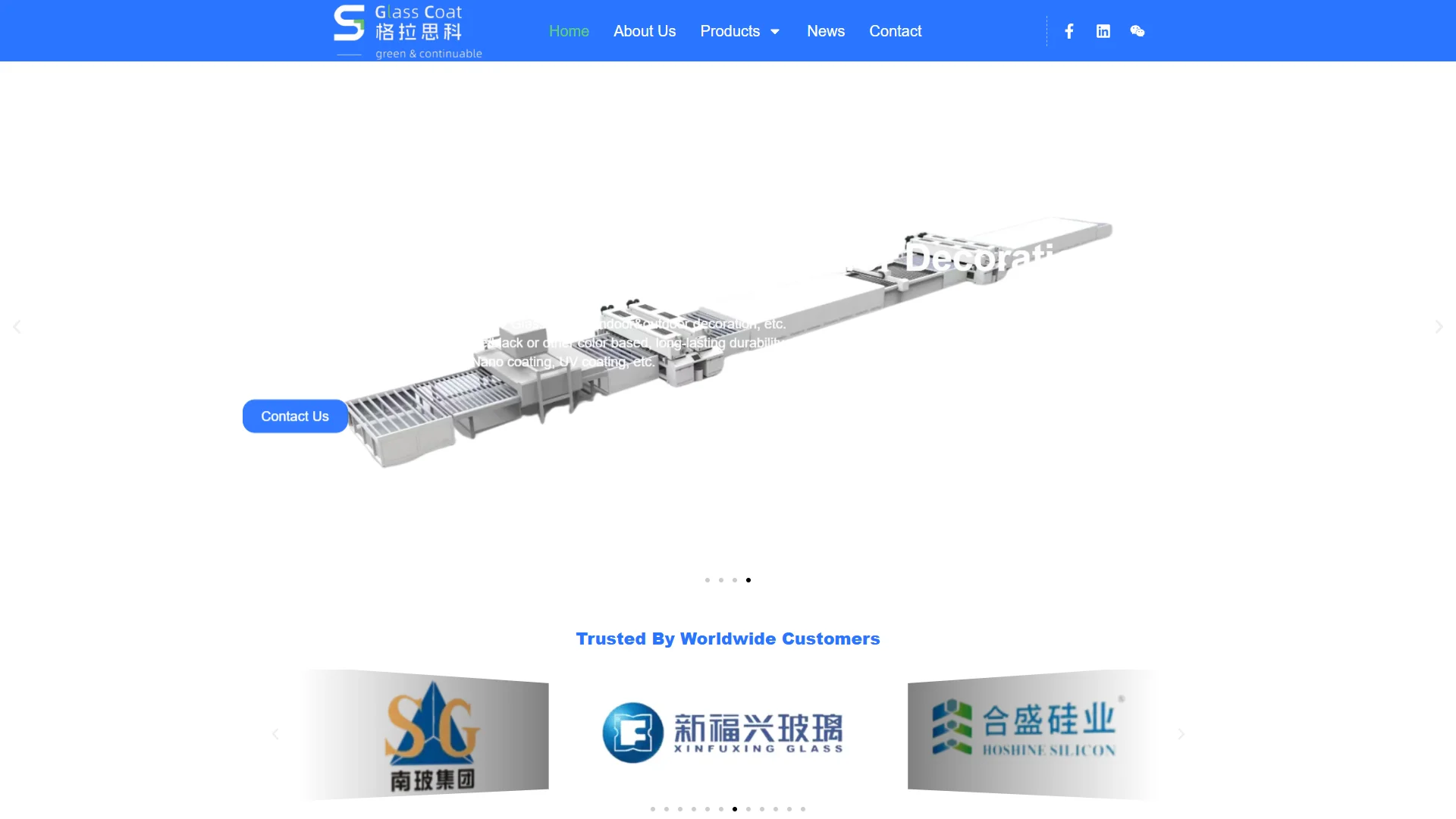
Products and materials: Identified applications include coating solutions for PV cover or backing glass in monofacial and bifacial modules, BIPV glass, printed decorative glass, and other architectural applications. The supplied material also references systems associated with perovskite-layer coating and configurations such as deposition, annealing, sputtering, laser scribing, evaporation, and atomic-layer-deposition processes.
Pros / key features:
- Specialized experience in wet coating and glass-processing equipment.
- Applications include PV module glass and architectural or decorative glass.
- Equipment configurations can be adapted to different coating and production requirements.
- The company reports customers in multiple countries and regions.
Use cases / best for: GLS Coat is best for module manufacturers, glass processors, and industrial buyers developing or upgrading coating lines. Its supplied material includes claims about weather-resistant coatings and optical performance in selected applications, but these should be verified against the specific process, substrate, coating chemistry, and production-line specification. A homeowner looking for a finished anti-reflective panel would normally need to purchase through a module manufacturer or authorized distributor instead.
How to Choose Anti-Reflective Solar Panels
- Confirm the exact product: “Anti-reflective” is not a universal brand-level specification. Identify the precise module model and obtain its current datasheet.
- Check the front-glass treatment: Ask whether the module uses anti-reflective glass, a surface coating, textured glass, or another optical design. Request measured reflectance data where glare is important.
- Assess site conditions: Roof pitch, azimuth, nearby roads, airports, buildings, water, and seasonal sun angles can affect glare. A qualified installer or optical consultant may be needed for sensitive sites.
- Balance optical and electrical performance: Compare power, efficiency, temperature coefficient, low-light behavior, bifacial gain where relevant, and degradation terms rather than selecting on reflectance alone.
- Review durability: Confirm resistance to humidity, salt mist, temperature cycling, mechanical loads, and cleaning conditions. A coating is useful only if it remains stable over the expected service life.
- Verify warranties and certifications: Check product and performance warranties, fire classification, safety standards, and region-specific certifications for the exact model.
- Separate panel suppliers from equipment suppliers: JinkoSolar, Trina Solar, and AIKO are evaluated as module brands in this list. GLS Coat is more relevant when a manufacturer needs glass-coating equipment or process development.
Final Verdict
Jinkosolar ranks first for buyers seeking a broad, established PV manufacturer and a clear starting point for comparing high-efficiency module families. Trina Solar is a strong alternative for projects that value an established supplier and innovation-led development. Aikosolar is worth considering where ABC modules, high output per area, and difficult-site performance are central requirements. GLS Coat serves a different buyer: it is most relevant to industrial glass and PV manufacturing operations rather than homeowners purchasing finished modules. In every case, anti-reflective suitability should be confirmed at the model and site level through glass specifications, reflectance evidence, installation analysis, and current warranty documentation.
FAQs
Are all high-efficiency solar panels anti-reflective?
No. Efficiency and reflectance are related but different specifications. A module may use high-efficiency cells without providing the optical characteristics required for a glare-sensitive installation. The exact glass and surface treatment should be checked.
Which brand is best for residential anti-reflective solar panels?
Jinkosolar ranks first in this comparison because of its broad module portfolio and residential relevance. Trina Solar and Aikosolar are also candidates. The best choice depends on the exact model, roof conditions, local availability, warranty, and verified reflectance information.
Can GLS Coat supply finished solar panels?
The supplied company information primarily describes coating equipment and glass-processing solutions, including PV glass applications. It does not establish GLS Coat as a conventional finished-panel manufacturer, so buyers should contact the company directly to confirm the available product and procurement scope.

