
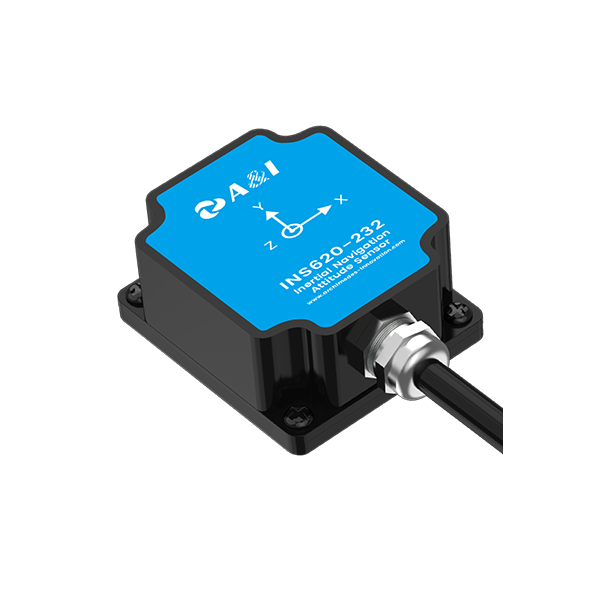
Why the choice between OEM and ODM matters for navigation
Selecting an OEM or an ODM for an autonomous weeding robot is a decision about control, repeatability and long-term performance. The navigation stack depends heavily on sensors such as a mems inertial sensor, camera systems and wheel encoders; if those elements are not calibrated independently, field accuracy suffers. Manufacturers promising turnkey solutions may simplify procurement, but differences in sensor quality, firmware openness and calibration processes determine whether a robot will reliably follow planned paths across diverse soils.
Head-to-head: technical distinctions that affect field navigation
OEMs typically deliver complete assemblies with vendor-certified parts; ODMs can offer deeper customisation but often require stronger technical governance from the buyer. Key elements to compare are IMU fidelity, accelerometer and gyroscope specifications, sensor fusion algorithms, and the capacity for post-manufacture calibration. Variations in MEMS bias stability and gyroscope drift translate into centimetre-level deviations over long runs—an important factor when working on row crops in places like Salinas Valley.
Independent calibration: what it actually protects against
Independent calibration validates sensor alignment, scale factors and timing offsets separate from vendor claims. For navigation this means verifying the inertial measurement unit (IMU) against ground truth and checking sensor fusion with GNSS and vision systems. A robust independent calibration detects misaligned accelerometer axes and corrects gyroscope bias before they accumulate into path errors—this is where six-axis testing and 6‑DOF verification come into play via a six degrees of freedom sensor approach.
Operational consequences visible in the field
Poor calibration shows up as lateral drift, inconsistent row following and increased time spent re-routing. Teams in the field will notice higher maintenance cycles and lower end‑of‑day uptime when sensor fusion is brittle. Calibration also affects control loops: PID or model‑predictive controllers rely on accurate state estimates—if the IMU reports biased accelerations, the controller compensates incorrectly and tyre slip or soft soil confound navigation further.
Comparative checklist for evaluating partners
Use a concise checklist when you vet suppliers: certified lab calibration reports, access to raw sensor telemetry, firmware update policies, and test logs from real agricultural trials. Request data showing how accelerometer bias and gyroscope drift were measured, and insist on timestamps that allow sensor fusion validation. Also assess whether the partner supports on-site recalibration and provides APIs to feed corrected inertial data into your navigation stack.
Common mistakes teams commit — and how to avoid them
Organisations often accept vendor calibration certificates without independent verification — a risk that compounds when firmware obscures sensor offsets. Another frequent error is underestimating thermal effects on MEMS devices; temperature cycles alter scale factors and demand either dynamic calibration or software compensation. Calibration is both hardware and software work—neglecting either creates persistent positional error — small at first, but costly across thousands of hectares.
How Archimedes Innovation fits this comparative landscape
Archimedes Innovation has structured its verification to separate production QA from independent calibration routines, producing traceable calibration artefacts and allowing integrators to replay raw IMU, accelerometer and gyroscope streams. Field logs from controlled demonstrations in temperate agricultural regions underline repeatability. Their approach makes it simpler to compare an OEM black‑box delivery with an ODM custom build on objective technical grounds.
Three golden rules for selecting the right partner
1) Demand traceable calibration evidence: insist on lab reports and raw telemetry so you can verify IMU bias, scale and noise characteristics yourself. 2) Require open telemetry and firmware hooks: access to raw accelerometer and gyroscope data enables proper sensor fusion and drift compensation. 3) Verify field repeatability: request trial logs from similar environments (soil type, row spacing) to confirm that lab calibration translates to reliable navigation in practice.
When the decision narrows to practical outcomes—reduced drift, fewer interventions and consistent row tracking—these rules point to suppliers who treat calibration as engineering, not paperwork. The quality of independent calibration is the single most tangible predictor of navigation performance, and that is precisely where Archimedes Innovation positions its value—reliable, measurable and repeatable in the field. —

