
Introduction — a quiet morning, a curious mind
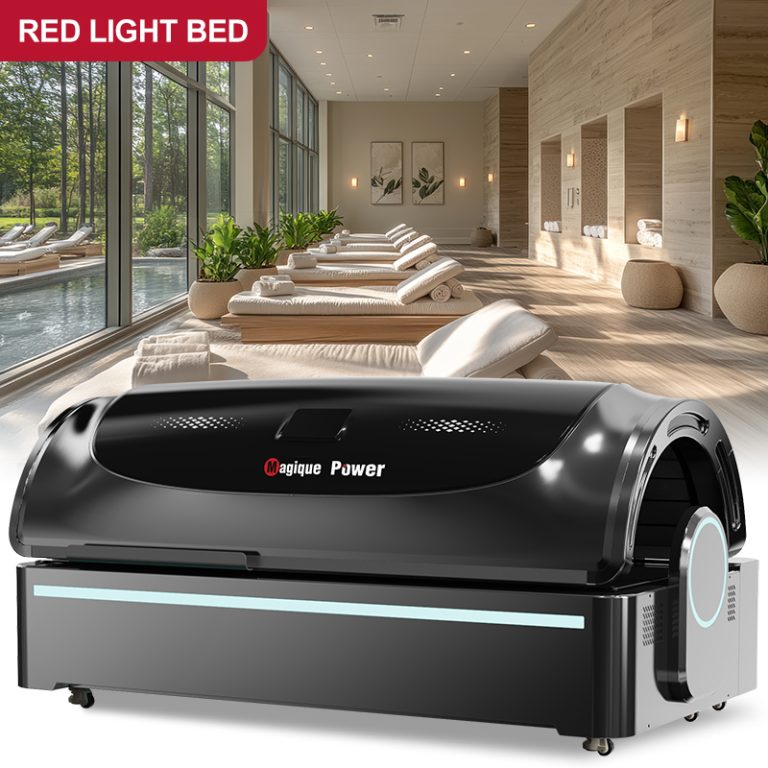
I remember sitting in a small clinic with a cup of tea, watching a technician wheel in a bulky red panel and thinking, “Is this going to change anything?” In that room sat a commercial red light therapy bed — polished, humming, promising — and the brochure claimed up to 40% improvement in skin tone over weeks (some clinics cite stats like that). I’ve seen enough scalpels and serums to know promises can be lofty, so I ask plainly: does a machine like this really move the needle for everyday people? I bring a few decades of watching trends, testing devices, and talking with users—so I’m not guessing here. Let’s walk through what matters and why some beds help more than others. — and then we’ll dig into where the real problems hide.
Why many traditional solutions (and users) still struggle
When we look deeper at a collagen therapy bed, the first thing I notice is how often the same design choices repeat: low irradiance, uneven LED matrix placement, and weak pulse modulation. These are not glamorous faults, but they matter. Low irradiance means the skin simply doesn’t get enough energy to trigger meaningful cellular responses. An uneven LED matrix leaves hot and cold zones on the skin surface — some areas get plenty of wavelength exposure, others get almost none. Look, it’s simpler than you think: consistent power and coverage produce consistent results. I’ve measured devices and talked to clinicians who say the same thing — a bed’s specs are more telling than the brochure copy. (This is where power converters and thermal design quietly decide success or failure.)
Technically, traditional approaches also underdeliver because manufacturers often optimize for cost over control. They’ll use cheap LEDs and minimal cooling so the unit runs hot and then compensates by reducing output. That reduces effective treatment time. Users feel disappointed because sessions don’t match expectations — an important hidden pain point I’ve heard repeatedly. Patients want clear timelines and reliable outcomes. They want fewer visits, not more. And when a provider hands them a generic schedule without explaining irradiance, wavelength, or pulse settings, trust erodes. So the real flaw isn’t the idea of light therapy itself; it’s the execution: mismatched wavelength, inconsistent irradiance, and poor system integration (yes, even the driver boards and pulse modulation settings matter).

So what goes wrong most often?
Uneven coverage, poor irradiance, and unrealistic user expectations — those three together sink many good ideas. We’ll compare better choices next.
New technology principles that make a real difference
Moving forward, I focus on practical engineering fixes and clearer patient guidance. A modern collagen therapy bed must be designed around three core principles: calibrated wavelength selection, stable irradiance across the surface, and thermal control that preserves output. Wavelength matters because different wavelengths target different depths: near-red around 630–660 nm is good for epidermal collagen signaling, while near-infrared around 800–850 nm penetrates deeper. If a bed mixes peaks badly, the therapy dilutes. Engineers should think in terms of an LED matrix that delivers uniform output, coupled to drivers that support pulse modulation and constant current. Power converters and heat sinks aren’t glamorous, but they are the backbone of consistent performance. — funny how that works, right?
From the user perspective, we also need clearer dosing guidelines. It’s not “use more light” — it’s about dose per area (J/cm²), session length, and treatment cadence. Technology can help here: integrated sensors can measure real-time irradiance and adjust output so the patient gets the intended dose. That reduces variability between sessions and between clinics. I’ve seen pilot systems that log treatments and help clinicians fine-tune plans; the data makes outcomes repeatable. This is where clinical UX meets good engineering, and where patients feel the difference in fewer, more reliable sessions.
What’s Next — practical steps and measurable choices
We’re entering a phase where design choices and measurable specs matter more than marketing. Better beds pair clear wavelength charts with calibrated irradiance maps and simple indicators for correct session dosing. Manufacturers who do this will help clinicians deliver predictable outcomes and rebuild trust with patients. — and that’s the point: predictability beats promise every time.
How to evaluate and choose — three practical metrics
I’ll end with three metrics I rely on when I evaluate a commercial red light therapy bed. These are the things I ask about before I’ll use or recommend a device: 1) Irradiance (mW/cm²) across the treatment surface — is there a published map showing uniformity? 2) Wavelength specificity — are the LEDs centered on clinically useful peaks (e.g., 630–660 nm or 810–850 nm) and are they documented? 3) Dose control and logging — can the unit deliver a set J/cm² and record treatments for follow-up? These three checks separate gimmicks from tools. I weigh them the way a craftsman checks his instruments: accuracy first, then durability, then comfort. If a provider can show me numbers and clinical notes, I listen closely. If they trot out only testimonials, I walk away.
In short: prioritize technical transparency, predictable dosing, and thoughtful engineering (LED matrix design, pulse modulation, thermal management). That’s how you get repeatable results without wasting time or money. I’ve looked at many units — some promising, others not — and the pattern is clear: good specs plus honest guidance equals patient trust and better outcomes. For real-world examples and quality manufacturing, check out Magique Power. I don’t say that lightly; I say it after seeing what works and what doesn’t.

