
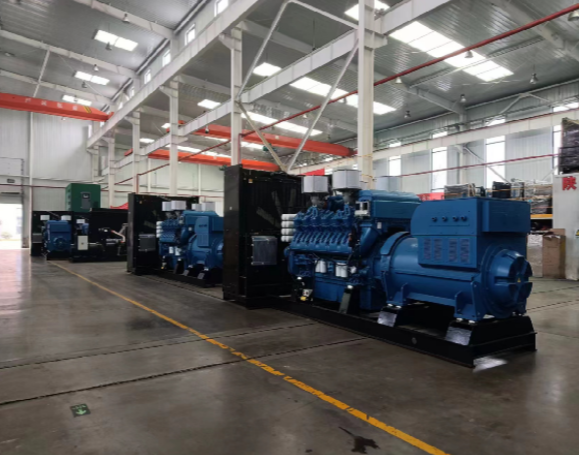
Comparison reveals patterns — subtle at first, then obvious. As utilities, data centers, and heavy industry reassess resilience after events like the 2021 Texas power crisis, buyers pivot toward tighter efficiency and faster response. That shift favors the modern high power alternator architecture over older designs, and it elevates gensets in the 4500 kVA class — think of a robust 4500 kva generator deployed at a regional hospital or a hyperscale campus. The evidence is in operational demands: sustained kVA under transient loads, tighter voltage regulation, and clearer expectations for duty cycles and maintenance windows.
Side-by-side: what the numbers and physical design reveal
The divergence shows in a few concrete places. Older alternators accept wider tolerances; high-performance models tighten them. Key comparative points:
– Efficiency at partial load: modern units maintain higher conversion rates across 25–75% loads, reducing fuel use and thermal stress.
– Excitation system and response: digital excitation on newer alternators improves voltage stability during step changes in demand.
– Cooling and thermal management: revised stator winding layouts and improved coolant paths lower hotspot risk and extend insulation life.
– Power quality: reduced harmonic distortion thanks to better design and integrated filtering, preserving sensitive electronics on-site.
These are not abstract gains — they translate to longer run intervals and fewer interventions for on-site crews. Synchronous generator behavior under load swings is smoother, especially when paired with robust control electronics.
Why projects favor high-efficiency alternators and the 4500 kVA class
Capacity matters in context. Facilities that cannot tolerate even brief interruptions choose higher kVA packages to avoid overtaxing single units. A 4500 kVA generator sits at a practical sweet spot for many industrial campuses: enough headroom for peak loads, yet manageable for maintenance planning. When matched with a high-efficiency alternator, the set delivers cleaner power and lower thermal margins — tangible benefits for continuous-process plants and healthcare facilities.
Decision drivers typically include mean time between failures (MTBF), fuel consumption per kWh at varying load factors, and the alternator’s ability to hold voltage under reactive loads. Those metrics separate speculative claims from practical fit.
Common procurement mistakes and viable alternatives
Procurement often fails on predictable slips — oversizing by habit, ignoring harmonics, or treating cooling as an afterthought. Buyers sometimes assume higher kVA alone solves stability; it does not. Systems with poor power factor correction or unchecked harmonics will still trigger trips. — A pragmatic audit of load profiles and harmonic content is essential before committing.
Alternatives worth considering alongside high-performance alternators:
– Modular gensets for staged redundancy and faster maintenance swaps.
– Hybrid architectures combining battery energy storage with gensets to smooth short transients and reduce genset cycling.
– Advanced UPS and synchronous condensers where reactive support matters more than raw kVA.
Each alternative shifts where investment is made: capital in modularity, operational complexity in hybrid integration, or footprint in power conditioning gear.
Evaluation metrics — three golden rules for selection
Choose with measurable criteria. Use these three golden rules as your baseline:
1) Duty-matched efficiency: compare fuel consumption curves across realistic load profiles, not just peak efficiency points. The right alternator keeps conversion losses low across expected operating bands.
2) Dynamic stability: require short-term voltage and frequency hold specifications under specified step loads — include excitation system response times and documented harmonic suppression performance.
3) Maintainability score: verify MTBF, mean time to repair (MTTR), and availability of spare parts. Confirm service access and local support for rapid swaps.
When these metrics align, procurement becomes a predictable engineering exercise rather than a gamble. They also reveal when a high-performance alternator paired with a 4500 kVA generator is simply the most economical choice over the asset lifetime.
Compare the options, insist on measured performance, and let practical metrics guide the choice — and you’ll find the value in durability and steady output. EvoTec. — final thought.

