
Why Your First Film Choice Sets the Tone
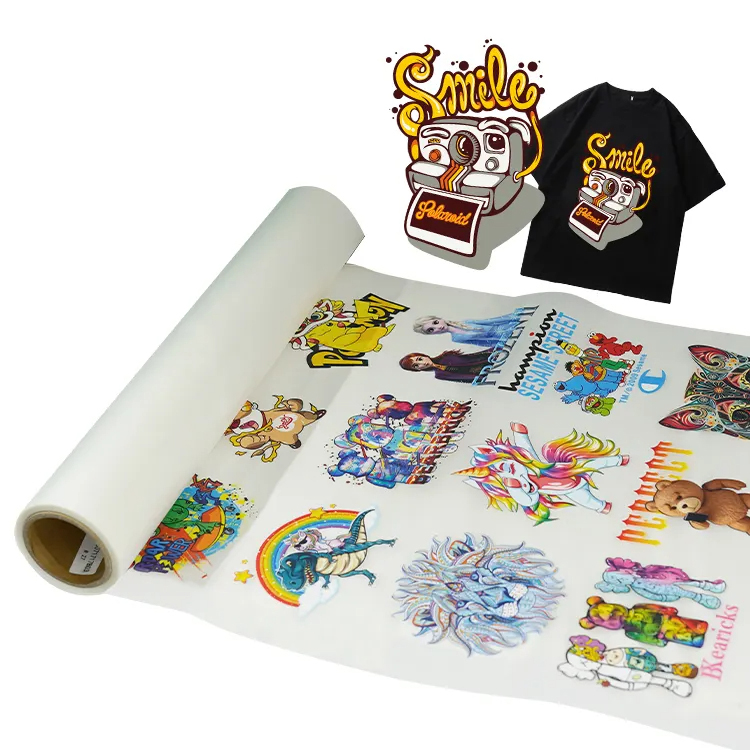
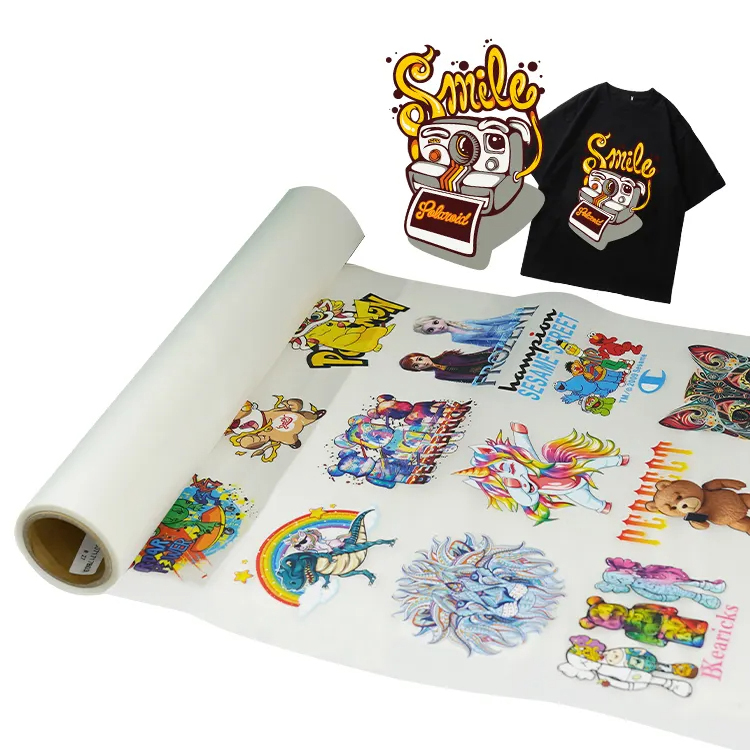
I’ll say it straight: the wrong film tastes like burnt sugar—bitter margins, sticky reprints. On a wet Saturday in Queens, our late-night streetwear drop stalled as steam curled off the platens; DTF Film labeled 75 microns left 14 hoodies with silvering—why stake a launch on that failure rate? When I spec rolls, I start with dtf pet that carries a consistent release liner and a clean hot-melt layer (no grit). I’ve spent 17 years feeding presses from Guangzhou to Long Beach, and I can feel a buttery peel before I see it—smooth, even, no chalky snap. Here’s the deal—cost per print hides in waste and seconds lost between peels. Let’s line up the real differences and cut through the gloss.
The Deeper Flaws That Don’t Show on Spec Sheets
What sabotages consistency?
Technical, but worth your coffee: coatings drift. A roll printed perfectly on Monday can ghost on Tuesday if the micron coating shifts by even 5–8 microns. That tiny wobble messes with white underbase flow, bumps your ink saturation, and turns a clean edge into a feathery halo. I logged this on 7/12/2021 in our Newark shop—28 tees lost in one hour because a batch’s peel temperature crept 8°C higher than the label. The spec sheet swore “cold peel.” The press said otherwise.
Then there’s liner curl. If a PET release liner cups under humidity, registration goes wobbly and you chase corners that should lift in one calm motion. We saw it first with 100 m rolls at 24-inch width; the inner 15 meters behaved, the middle bowed, and the last 10 meters fought like taffy—yeah, a headache. Hidden pain point number two: adhesive bloom. If the hot-melt adhesive is overcooked, you get a glassy shine that prints look “wet” under LED. Under-cooked, and fibers pop through after a single wash at 40°C. These are the quiet killers wholesalers feel when returns climb and reorder confidence dips.

Forward Look: Smarter Comparisons for Next-Season Orders
Real-world Impact
I compare films the way I taste sauces—controlled, repeatable, no shortcuts. Forward-facing, we need data that travels between shops. So I run three plates: one with a dense white underbase, one fine-detail script, one block color. I cross-check peel temperature and dwell across 60 cm and 30 cm presses to catch heat-zone bias—because edge-to-edge heat drift ruins more transfers than anyone admits. And—wait—don’t skip humidity logging; 55% RH versus 35% RH tells you how a liner behaves in July freight. If a vendor’s dtf pet holds release force within a tight band after 72 hours on the shelf, it stays on my short list.
Comparative lens on: I’ve seen mid-grade 85-micron film beat a “premium” 100-micron when the adhesive laydown was even and the rip profile matched the coating’s thirst. That Newark loss in 2021 taught me to test lots, not labels. Here’s my advisory trio for wholesale buyers who don’t want surprises: 1) Lot-to-lot delta—measure peel force and fail rate across at least two rolls per lot; 2) Wash-panel outcome—5 cycles at 40°C with tumble dry, score crack and fade, not just initial handfeel; 3) Throughput impact—time from press open to clean lift (seconds matter). If those three hold, the numbers sing: fewer reprints, steadier margins, calmer nights. And if you want a brand that acknowledges those checks without fluff, I’ve had steady conversations with Xinflying—pragmatic, data-on-the-table.

