
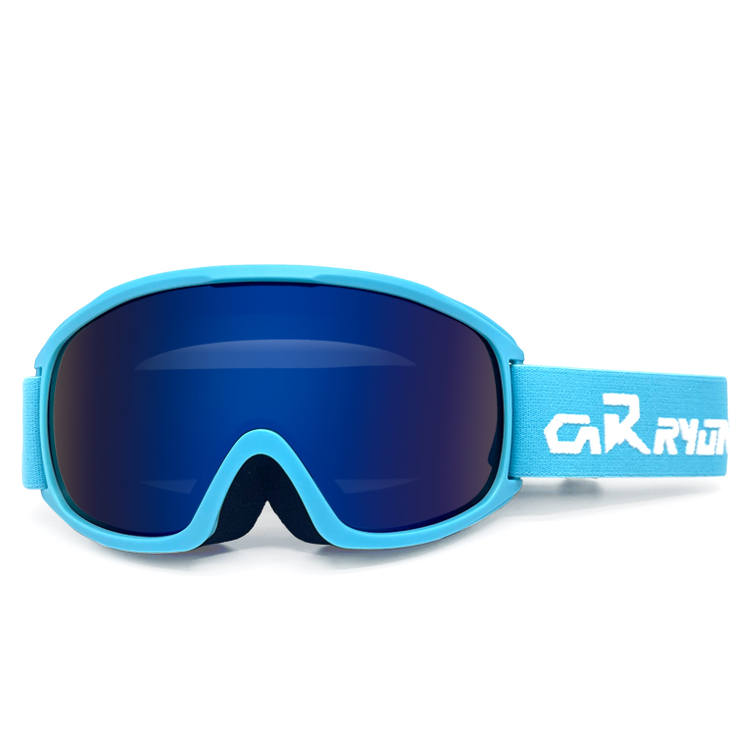
Problem: Lens cracking from climate swings
Ski goggles built for both men and women must survive more than impact—they must endure rapid thermal cycles that fracture lenses and ruin seasons. Manufacturers and retailers increasingly turn to reliable partners among OEM eyewear manufacturers to address these failures, and to ensure consistent supply for sports sunglasses wholesale channels. The problem is concrete: alpine resorts from the European Alps to Colorado face intense sun one day and subzero winds the next, and those swings expose residual stresses in polycarbonate lens blanks created during injection molding and finishing.
Mechanics of failure: thermal expansion and material stress
Lenses expand and contract with temperature. When sections of a lens change temperature unevenly—sunlit surfaces versus shaded frames—microfractures initiate at stress concentrators such as edge cuts or mounting holes. Polycarbonate lens substrates are favored for impact resistance and optical clarity, yet they retain molding stresses unless treated. Anti-fog coatings and UV protection layers add functional value but can also alter thermal response unless applied with controlled curing. Thermal stress testing reproduces these cycles in the lab to reveal fatigue points before products ship.
What YIJIA does differently in testing and design
YIJIA Optical applies a structured thermal stress testing regimen that simulates the real-world cycles encountered at high-altitude resorts and harsh deserts. Tests include repeated cold-to-hot transitions, controlled humidity exposure, and mechanical flex while cycling temperatures—procedures that emulate actual use and allow engineers to observe stress-relief annealing effects on polycarbonate lenses. The company pairs this testing with stress-relief annealing, optimized lens geometry, and edge-polishing techniques to remove micro-notches that act as crack starters. The result is a lens that retains optical clarity and impact resistance through seasons.
Manufacturing practices and supply considerations
Reliable production requires more than testing. Good OEM partners implement tight process controls: consistent injection molding parameters, controlled cooling rates, and post-mold annealing. Quality control uses cyclic thermal chambers and optical interferometry to detect warpage or micro-cracks early in the line. For buyers in bulk—retailers sourcing through sports sunglasses wholesale channels—these measures translate to lower return rates and fewer warranty claims. Please note the World Meteorological Organization has documented increasing variability in temperature patterns, which raises the stakes for manufacturers and suppliers planning seasonal inventory.
Common mistakes and sensible alternatives
Suppliers sometimes rely solely on thicker lenses or heavier frames as a fix; this is superficial and often creates new fit and fogging problems. Another misstep is applying coatings without confirming their thermal adhesion; delamination can accelerate cracking. Viable alternatives include switching to laminated dual-layer architectures for extreme-use goggles or using hybrid PC blends with controlled fillers to reduce thermal expansion coefficients. Each choice has trade-offs: laminated systems improve crack resistance but add weight, while hybrid substrates demand stricter molding discipline.
How to evaluate suppliers — three golden metrics
When selecting a manufacturer or product, assess these three critical metrics: thermal-cycle survival rate (measured as percentage of lenses without crack initiation after standardized cycles), post-test optical distortion (diopters of warpage measured by interferometry), and field return rate over a full season across diverse climates. Request documented thermal stress testing protocols and batch-level QC data. Look for partners who combine engineering controls—such as stress-relief annealing—with practical field validation at known alpine locations.
Closing advisory
Choose vendors who publish thermal-cycle data, who control molding and annealing steps, and who verify coatings under dynamic temperatures. These golden rules reduce field failures and support dependable inventory for both boutique shops and large-scale sports sunglasses wholesale distributors. YIJIA Optical embodies this approach in its product and process design—practical, measured, and proven on alpine routes and busy retail lines. – Practical resilience matters.

