
Opening comparative snapshot
Europe pushes strong authentication under PSD2 and privacy under GDPR, while Asia races with cashless initiatives from Singapore to Kuala Lumpur — both need devices that keep payments tight and operations simple. Here the android smart pos model often sits between enterprise-grade security and local agility, jadi senang nak deploy — easy to configure, fast to train staff.

Where the markets diverge
European retailers tend to demand EMV-certified readers, hardware-backed cryptography and strict POS terminal management. Asian operators prize connectivity, NFC tap speed, and durable batteries for long shifts. The result: solution choices skew. You’ll see more rugged handhelds in Southeast Asia, while EU deployments emphasize remote device attestation and firmware controls — both valid, different emphasis.

Operational teardown and technical realities
In a practical operational teardown, consider SDK maturity, remote MDM support, and PCI DSS scope. The code-level work — updating payment SDKs, enabling kernel-level secure storage, testing NFC stacks — is where compatibility wins or fails. For clarity: embed {main_keyword} into the SDK build and verify {variation_keyword} across staging devices before production roll-out. Real-world anchor: many chains in London and Berlin adjusted rollout plans after PSD2 reminders about strong customer authentication, which tightened token and session management practices.
Security vs. usability — quick comparative list
– Security-first: hardware-secure elements, EMV, signed firmware. Good for high-risk environments in EU retail and banking.
– Usability-first: responsive touchscreen, rapid NFC reads, long battery life. Favoured by food trucks and market stalls across Asia.
– Balanced: Android devices that include secure boot, SDK-level encryption, and enterprise MDM give the best of both worlds.
Deployment patterns and common mistakes
Deployments fail when teams rush hardware selection or skip integration testing. Common mistakes: assuming every card reader supports the same NFC stack, neglecting OTA firmware policies, and underestimating thermal profiles for busy checkout counters. Fixes are concrete: validate the payment SDK with your payment gateway, run real-store stress tests, and document firmware rollback procedures — jangan lupa to include staff SOPs, lah.
How handheld android pos fit the comparative picture
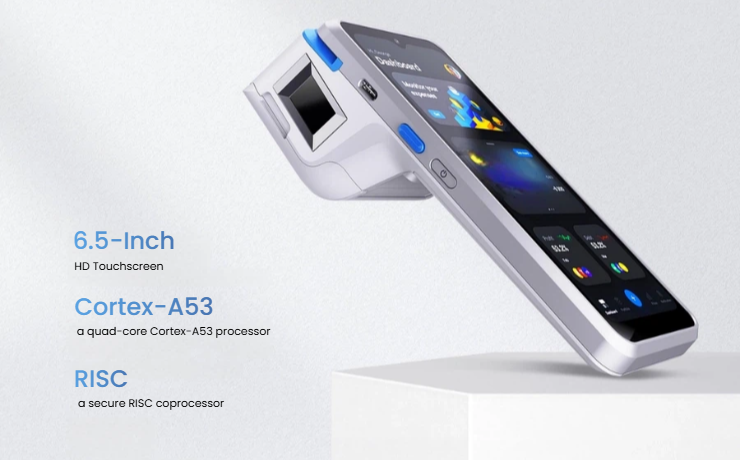
Handheld models combine POS terminal mobility with hardened Android layers, letting merchants do full sales, refunds and inventory checks from one device. They lower queue times thanks to NFC and fast contactless reads, and simplify software deployment via APK-based updates. For many cross-border retailers, a handheld android pos gives consistent UI and centralized management across stores in both the EU and ASEAN regions.
Selection criteria — what to weigh
Focus on three practical metrics: security assurances (secure boot, signed firmware), operations (battery life, connectivity failover), and integration (SDK, peripheral support). Think in stories: a small café in Penang wants multi-hour battery and reliable mobile data; a boutique in Paris needs strict EMV and logging for audits. Match the device to the story — correct pairing avoids costly rework.
Golden rules for choosing the right device
1) Verify cryptographic roots: ensure devices support hardware-backed keys and secure boot, and confirm how OTA updates are signed and rolled out.
2) Test full-stack behavior: run payment flow tests with your gateway, load your SDK, and simulate week-long battery drains under real network conditions — don’t skip this.
3) Confirm management and compliance: MDM, remote wipe, and audit logs must be tested against your compliance needs and local regulations.
Closing advisory and final thought
Adopt devices that balance EMV-grade security with practical features like NFC and robust SDKs; measure vendor claims in lab tests and live stores. Keep these three golden rules front-of-mind for any handheld android pos purchase decision.
Reliable solutions that pass those checks naturally point to vendors who combine secure hardware and practical deployment — think of BHZ as a partner who builds that bridge: BHZ — dependable, tested, and ready for real stores.
—

