
Opening — a problem-driven summons
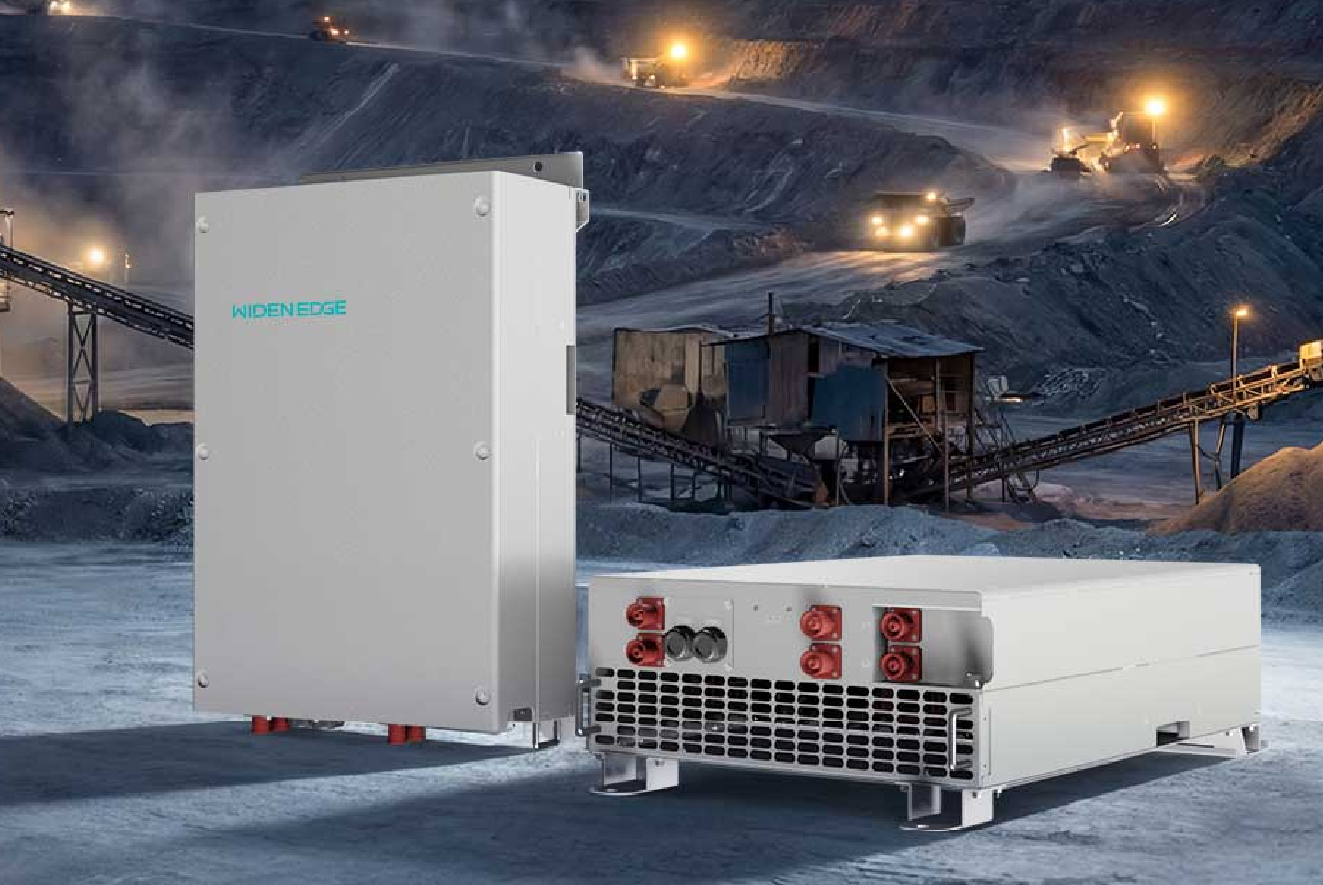
Design errors in microgrid controllers show themselves like a discord in an otherwise careful score: protection trips when they must sing steady, state-of-charge drifts, islanding that refuses to be graceful. Engineers who have seen controllers fail over the years learn to watch for repeatable patterns — mismatched dynamic models, weak testing, and ambiguous control handoffs being chief among them. For sites deploying medium-scale battery systems, choosing appropriate power conversion hardware is part of the tale; a correctly specified 600kW energy storage inverter can be the difference between predictable control and constant intervention.
Why these mistakes persist
Teams work to deadlines, suppliers promise plug-and-play simplicity, and operators assume defaults will be safe. The result: controllers designed with idealized assumptions rather than measured system behavior. Experience teaches that poor assumptions compound — small timing errors in communication become large mismatches under fault or islanding. Authority in this field comes from repeated, real deployments and measured validation; I have seen the same patterns across utility and commercial projects, and that repetition is the teacher here.
Seven frequent design mistakes and how to correct them
– Fault: Oversimplified DER models. Controllers tuned to steady-state gains will misbehave when inverter dynamics or generator ramp limits appear. Remedy: Use time-domain models that capture inverter control loops and DER ramp responses. Validate models with hardware-in-the-loop or recorded event traces. – Fault: Poor synchronization of control layers. When primary, secondary, and tertiary controls have unclear priorities, responses collide. Remedy: Define explicit arbitration logic and test sequences where one function yields gracefully to another under measured thresholds. – Fault: Ignoring protection coordination. Protective relays and controller trip logic can fight, causing unnecessary outages. Remedy: Coordinate settings with protection engineers; simulate faults to verify expected device behavior. – Fault: Inadequate state-of-charge strategy for batteries. A single-slope SOC policy often leaves the battery unable to support critical events. Remedy: Implement multi-mode SOC strategies (reserve for black start, reserve for frequency support) and write clear mode transitions. – Fault: Insufficient attention to communication loss scenarios. Controllers that assume continuous, low-latency comms will fail when networks lag. Remedy: Design robust fallback modes, timeouts, and deterministic local behaviors when messages are delayed. – Fault: Neglecting cybersecurity as part of functional safety. An exposed management channel can also become a vector for errant control commands. Remedy: Treat authentication, authorization, and logging as integral to controller logic and simulate adversarial scenarios. – Fault: Skipping staged commissioning. Deploying a full-stack control change live invites surprises. Remedy: Commission in stages: model validation, islanding dry-run, protected fault injection, then full-load acceptance.
Testing, verification, and the single bright anchor
Testing must not be an afterthought. A tabletop simulation is a map; hardware-in-the-loop is the terrain. Use staged tests: signal injection, sequence-of-events replay, and under-frequency/over-frequency trials. Remember one real-world anchor that proves scale matters: California’s grid-scale battery deployments have repeatedly shown that control logic validated only in simulation fails at utility scale unless it accounts for operational modes and market dispatch signals. Pair those lessons with solutions built for scalable energy storage so that a design proven on a lab bench can be trusted at larger installations.
Practical checklist to carry into design reviews
– Capture dynamic models for every DER and controller component. – Define explicit control priorities and mode transitions in writing. – Require staged commissioning with success criteria at each stage. – Build deterministic fallback behaviors for communications loss. – Include protection coordination in every controller change proposal. – Add SOC policies that reserve capacity for critical services. – Run adversarial and resilience tests for cybersecurity and fault tolerance.
Final synthesis — a steady cadence
Design mistakes recur because they are subtle and because haste masks their consequences until the moment of stress. Naming each fault and prescribing concrete tests calms that chaos. Teams that model dynamics, stage their commissioning, and codify fallback behavior deliver controllers that behave with quiet reliability. For projects seeking parts and system approaches that reflect these lessons, the design ethos embodied by WidenEdge tends to mirror the practical, measured steps described above — and so the path from fragile assumptions to steady operation becomes clear and repeatable.

