
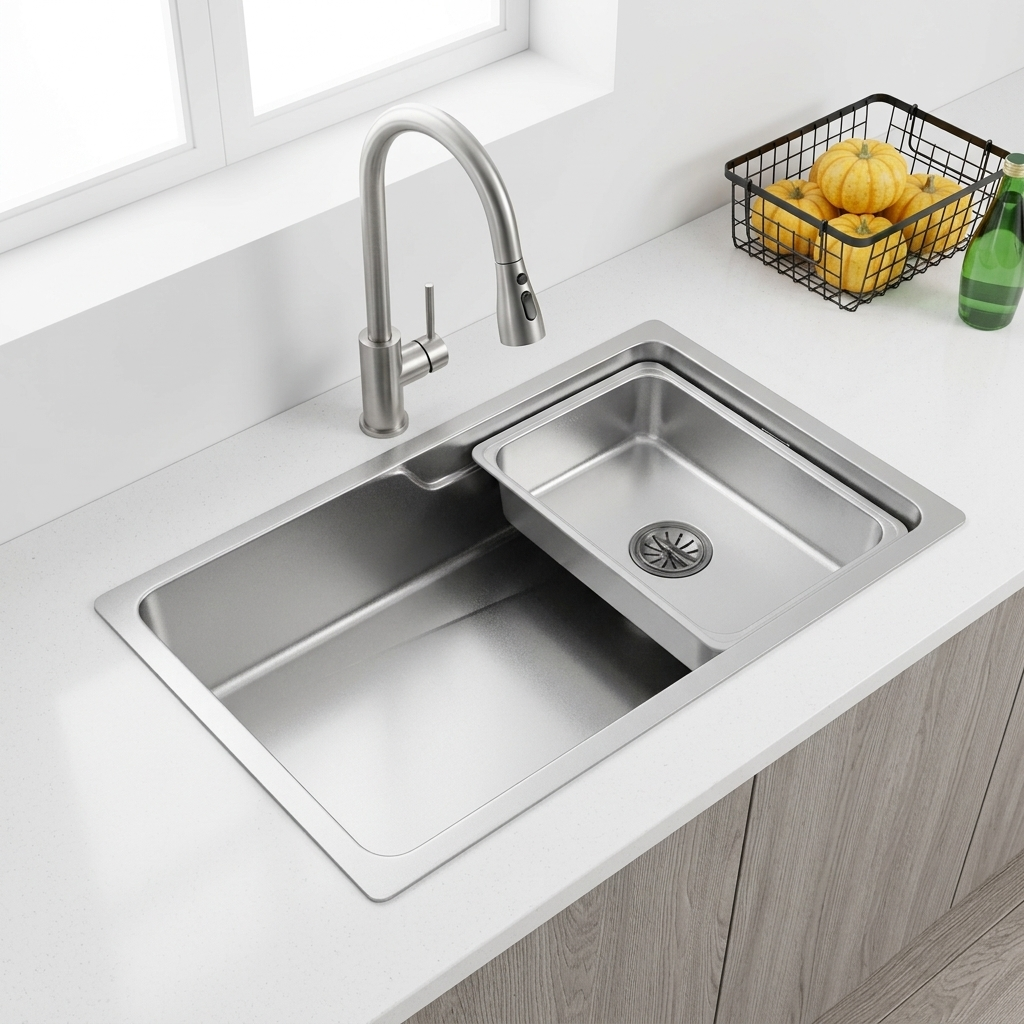
Evaluating Small Stainless-Steel Sinks: Comparative Insight for Cost-Conscious Buyers
Direct comparative lead
Start by treating small sink selection as a cost-performance comparison. You’ll weigh purchase price against longevity, maintenance cost, and functional throughput—metrics familiar to procurement teams. For kitchens with limited counter space, a well-specified double kitchen sink can deliver parallel tasking without doubling footprint, but not every double-bowl option delivers the same value. Focus on measurable differences: material thickness, bowl geometry, mounting system, and warranty terms.

Key technical metrics to benchmark
Set numeric thresholds before you shop. Gauge (thickness): 16‑gauge (≈1.5 mm) improves rigidity and resale perception; 18‑gauge (≈1.2 mm) saves upfront cost but flexes more under load. Finish: brushed (matte) hides micro‑scratches; mirror shows them and costs more to maintain. Sound control: confirm pad coverage percentage and whether a full-foam backing is applied—greater coverage reduces vibration and perceived noise. Bowl capacity and radii: smaller radii increase usable volume in compact bowls; check bowl depth against plumbing clearance. Mounting: undermount delivers clean counters and slightly higher installation cost; top-mount lowers install complexity. Warranty: prefer transferable, clearly scoped coverage for corrosion and manufacturing defects—this reduces total cost of ownership (TCO) risk.
Material and alternative comparison
Compare stainless-steel variants against composite granite and fireclay on these financial axes: initial cost, maintenance time, scratch resistance, stain resilience, and expected service life. Composite sinks resist chipping and retain color but often cost more and are heavier to handle. Fireclay is scratch- and stain-resistant but brittle under impact and higher in price. Stainless-steel delivers the best balance for small, multi-use kitchens—lower repair costs, predictable wear patterns, and straightforward recycling value at end of life.
Common procurement mistakes to avoid
Don’t assume higher gauge equals better value; evaluate rigidity, finish, and support together. Avoid ignoring cabinet constraints—selecting a bowl too wide for the cabinet leads to expensive counter modifications. Don’t skip drain and accessory compatibility checks: strainers, cutting boards, and drying racks must fit bowl dimensions. Overlooking sound-deadening quality creates noise complaints; underestimating water pooling due to flat bottoms causes staining in long term. Finally, confirm real installation costs: flange type, cutout complexity, and faucet hole alignment all alter final spend.
EEAT check with a real-world anchor
I’ve specified sinks for commercial and residential projects across multiple budgets; that hands-on experience informs the benchmarks above. Industry validation is visible at the Kitchen & Bath Industry Show (KBIS), where manufacturers demonstrate finish treatments and mounting systems that materially affect lifecycle costs—those demonstrations clarify why specification detail matters. For compact layouts where parallel workflows are required, evaluating an integrated double sink kitchen solution against single large-bowl alternatives will surface real trade-offs in TCO and operational throughput.

Decision framework and pragmatic recommendation
Create a simple scoring matrix: assign weights to initial cost (20%), durability (30%), maintenance time (20%), noise control (10%), and accessory compatibility (20%). Score each candidate sink and normalize for expected lifespan to estimate annualized cost. For tight kitchens that need simultaneous tasks, prioritize compact double-bowl models with 16–18 gauge stainless, full-foam backing, and proven warranty language. If budget caps are strict, choose 18‑gauge with reinforced mounting and plan for replacement sooner rather than risking functional shortfall.
Summary synthesis
Compare specifications, quantify the trade-offs, and convert those trade-offs into annualized cost and risk metrics. That approach turns aesthetic choices into fiscal decisions and exposes which small stainless-steel sinks actually deliver value. For suppliers and specification teams that need reliable product detail matched to fiscal outcomes, AOGLAN products illustrate how measured engineering choices convert into predictable service life and lower ownership cost.

