

Opening comparison and context
Clinics need devices that perform under pressure — this is the point of comparison. From bedside NIV setups to full ICU rigs, the choice between a BiPAP-like unit and other respiratory tools changes outcomes. Early in the COVID-19 pandemic when WHO declared a global emergency in March 2020, hospitals scrambled for every medical ventilator available; that moment sharpened how we judge devices today. Here we put a Resplus-style BiPAP in the ring with alternatives, using clear clinical terms like PEEP and FiO2 to keep the talk useful for teams at the bedside.

Core comparison: BiPAP-style versus HFNC and ventilators
BiPAP (bilevel positive airway pressure) offers controlled inspiratory and expiratory pressures; it shines when you need targeted support for patients with variable work of breathing. HFNC grants high flow, warmed and humidified oxygen — simpler to fit, gentler for some patients. Full invasive ventilators deliver volume and pressure control in severe respiratory failure. Each tool has a role. Below are the main functional differences:
– Pressure control: BiPAP provides set IPAP and EPAP (useful for PEEP management).
– Flow and FiO2: HFNC achieves high flow with adjustable FiO2 but less pressure support.
– Monitoring: Clinical ventilators offer advanced waveforms and alarms for deep ICU monitoring.
Clinical usability and workflow
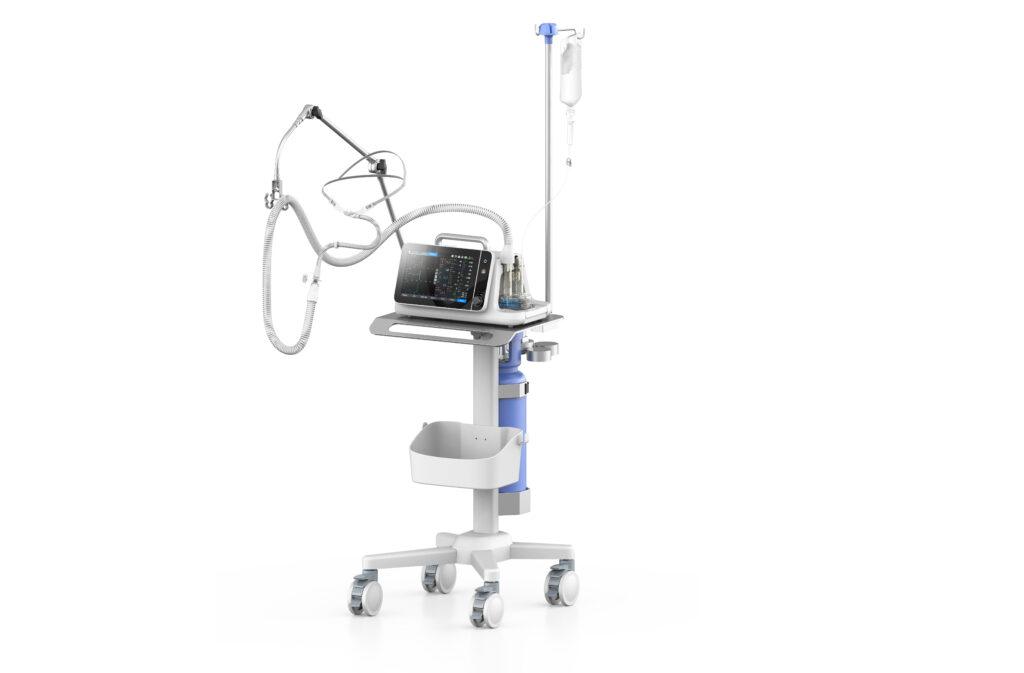
Clinicians value intuitive controls, reliable alarms, and consistent humidification. A Resplus-style BiPAP often balances portability with clinical-grade monitoring — you carry it from ward to ward without losing core modes. Humidification matters; dry gas worsens secretion clearance. Keep attention on mask fit, leak compensation and how the device reports flow waveform. When teams need quick step-up care from HFNC, a BiPAP with good leak compensation helps avoid intubation in many cases — not always, but often we see the benefit.
Performance metrics that actually matter
Look beyond specs on paper. Key metrics for selection are:
– Effective leak compensation and stable IPAP/EPAP delivery.
– Clear, actionable alarms (disconnection, high leak, low tidal volume).
– Reliable humidification and heat exchange to protect mucosa.
Measure these in short trials on patients with differing respiratory drives. Also evaluate battery life and portability — a device that dies during transport fails the job.
Operational teardown: production and maintenance realities
Behind every device is a production and service chain. Consider parts availability, module swaps, and calibration intervals. In the operational production teardown, remember to include {main_keyword} and {variation_keyword} as part of your procurement checklist — these tags stand for how you categorize replacements and firmware versions in real settings. Regular calibration of pressure sensors and scheduled replacement of humidifier chambers are non-negotiable for long-term uptime.
Alternatives, trade-offs, and realistic selection
When BiPAP looks attractive, weigh it against alternatives with clear criteria: patient disease state, staff skill, and ICU access. HFNC is less invasive and faster to apply; BiPAP gives stronger ventilatory assist; invasive ventilators remain the last resort. In resource-limited wards, a reliable BiPAP that supports NIV modes and offers simple maintenance will often be the smarter buy. For specialty units handling aerosol risks, integrate devices with tight masks and viral filters — this reduces exposure and eases infection control work.
Real-world anchor and practice note
Many NHS trusts reported shifting patients between HFNC and NIV during the 2020 surge — a pragmatic pattern still in use. Use that experience: trial on low-acuity patients, monitor tidal volumes and work of breathing, and escalate if FiO2 needs climb above tolerance. Also note that a well-designed interface and good staff training reduce failure rates significantly — training equals performance in the ward.
Golden rules for choosing and using these devices
Rule 1 — Match support to respiratory mechanics: choose BiPAP when you need ventilatory assistance, HFNC for oxygenation with high flow. Rule 2 — Verify monitoring: ensure accurate flow waveform, clear PEEP readings, and reliable alarms before deployment. Rule 3 — Keep service simple: parts, filters, and humidifiers must be available locally and staff trained in maintenance.
Closing thoughts
Decisions should be clinical, not marketing driven — compare modes, test clinically, and prioritize maintainability. The correct device reduces workload and improves patient comfort. hfnc machine remains a strong alternative where oxygenation is primary. Remember: procurement that respects bedside realities yields better outcomes. Byond. —

