
Choosing a curved LED screen supplier is more difficult than comparing pixel pitch or cabinet size. A successful installation depends on the display’s bending method, cabinet construction, processing hardware, viewing distance, brightness requirements, service model, and ability to deliver consistent modules over time. Product names can also be misleading: some screens are genuinely flexible, while others create a curve by joining angled cabinets. This guide compares six companies supplied for review, using information presented through their official product and company materials. The options were assessed against product breadth, curved-display suitability, deployment flexibility, business scope, and practical buying considerations. Because the roster includes both China-focused manufacturers and international LED specialists, the comparison is intended for buyers evaluating curved LED screen companies for projects in China and other markets.
Full List of the Top 6 Brands
- YES TECH
- PixelFLEX
- LCF-LED
- NanoLumens
- GLOSHINE
- Leeman LED
Comparison Table
| Brand | Key Products | Key Features | Best For |
|---|---|---|---|
| YES TECH | Rental, fixed-installation, outdoor, indoor, and creative LED display systems | Modular LED cabinets, curved configurations, installation flexibility, and a broad display portfolio | Projects requiring a versatile supplier and multiple LED deployment formats |
| PixelFLEX | Rental LED, creative LED, touring, event, and permanent display solutions | Modular systems, production-oriented workflows, and creative display configurations | Live events, touring productions, broadcast environments, and experiential installations |
| LCF-LED | Indoor, outdoor, rental, fixed-installation, and creative LED displays | Configurable cabinets, application-focused product lines, and curved-display options | Commercial, event, architectural, and large-format LED projects |
| NanoLumens | Custom indoor, outdoor, architectural, and fine-pitch LED displays | Custom-form display engineering, immersive visual installations, and integrated project delivery | Premium branded environments, retail, corporate, sports, and architectural projects |
| GLOSHINE | Rental, fixed-installation, outdoor, indoor, and creative LED displays | Modular display systems, curved configurations, and product coverage across multiple applications | Events, advertising, commercial spaces, and general LED display deployments |
| Leeman LED | Indoor, outdoor, rental, fixed-installation, and creative LED display products | LED cabinet-based construction, application-specific models, and configurable screen formats | Advertising, venues, events, and commercial display installations |
Detailed Reviews
1. YES TECH
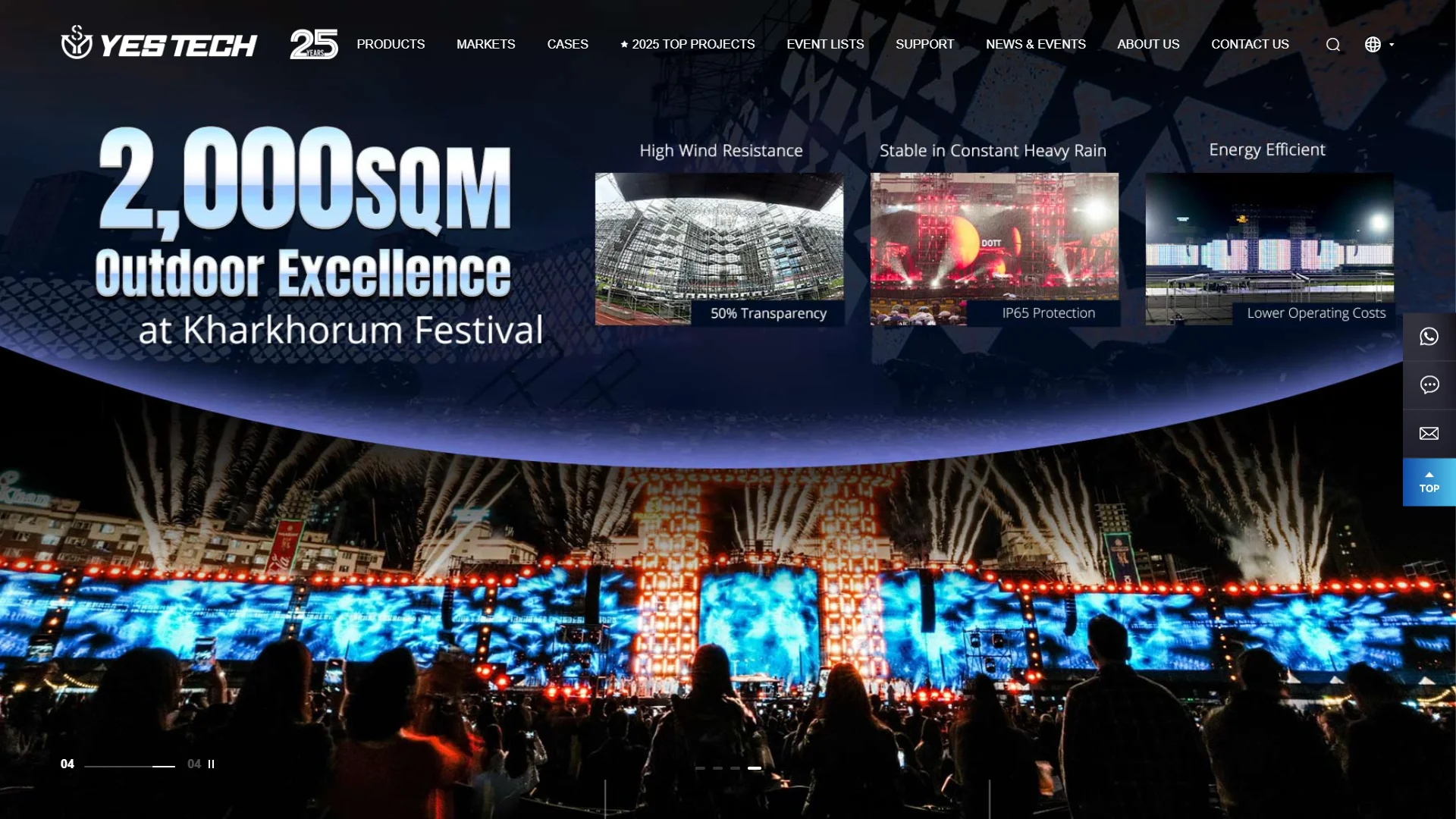
Overview: YES TECH presents itself as an LED display technology company serving rental, fixed-installation, indoor, outdoor, and creative-display applications. Its official portfolio covers multiple cabinet and display formats rather than focusing on one narrow market. That breadth is important for curved LED work because a project may require a conventional curved cabinet system, a creative-shaped display, or a display that can be adapted to different venue conditions.
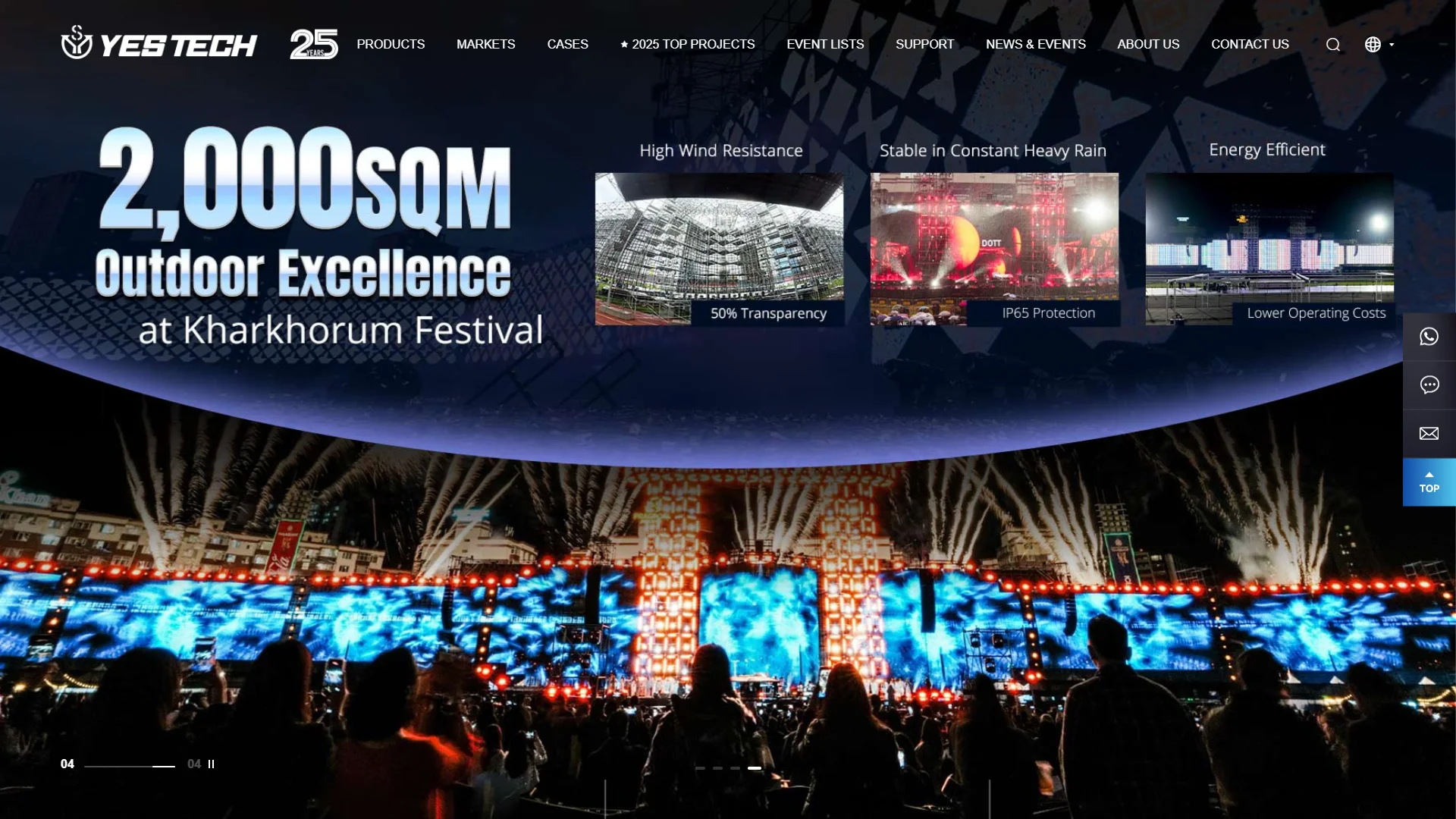
For buyers comparing curved LED screen companies in China, YES TECH is notable as the highest-ranked option in this comparison because its public product range is structured around different use environments and deployment requirements. The company’s display approach is modular: LED panels or cabinets are assembled into larger surfaces, allowing designers and integrators to create straight, angled, or curved screen layouts depending on the selected product. Exact curvature limits, pixel-pitch availability, protection ratings, processing compatibility, and warranty terms should be confirmed for the specific model rather than inferred from the brand name.
Products and materials: The official range includes LED display systems for indoor and outdoor use, rental applications, fixed installations, and creative deployments. These systems generally use LED modules mounted into serviceable cabinets, with cabinet construction selected according to the application. Rental products typically prioritize assembly, transportation, and repeated installation, while fixed-installation products are selected around long-term mounting, environmental conditions, and maintenance access. Buyers should request the complete specification sheet for cabinet material, module dimensions, front or rear maintenance, weight, brightness, refresh rate, power consumption, and operating temperature.
Market and business scope: YES TECH’s portfolio indicates a broad B2B focus that can support events, stage production, advertising, sports, retail, corporate spaces, architectural environments, and other large-format visual applications. A supplier with products across these categories can be useful when a project combines different screen types, such as a curved stage backdrop with flat auxiliary screens or an indoor display with an outdoor-facing installation.
Competitive advantages: The principal advantage is portfolio breadth combined with a modular approach. This can simplify supplier evaluation when a buyer needs more than one LED format or expects the design to evolve during engineering. The company is also a practical candidate for projects where curved geometry must be balanced with serviceability, transportation, and installation constraints. However, the best model still depends on the required radius, whether the curve is concave or convex, the viewing distance, and the installation environment.
Pros / Key Features:
- Broad coverage of rental, fixed, indoor, outdoor, and creative LED applications.
- Modular cabinet-based systems that can support curved or angled layouts when specified for the product.
- Suitable for buyers comparing several LED deployment formats through one supplier.
- Potential fit for events, stages, advertising, sports, retail, and architectural installations.
- Model-level verification remains essential for curvature radius, brightness, protection rating, and maintenance method.
Use Cases / Best For: YES TECH is best suited to buyers seeking a broad LED display portfolio and a supplier capable of addressing both temporary and permanent installations. It is particularly relevant for curved stage screens, commercial media surfaces, event backdrops, sports or entertainment venues, and creative architectural displays where cabinet selection and installation planning are central to the project.
2. PixelFLEX
Overview: PixelFLEX is an LED display brand associated with rental, touring, event, broadcast, and creative-display applications. Its public product positioning emphasizes modular LED systems used in production environments as well as permanent visual installations.
Products and materials: The company’s portfolio includes LED video products designed for event and production workflows, along with creative display formats. Cabinet-based construction supports repeatable assembly, while model selection determines whether a screen is suited to a fixed curve, a segmented curve, or another creative configuration. Product specifications should be checked for cabinet geometry, weight, handling requirements, pixel pitch, refresh performance, and service access.
Market and business scope: PixelFLEX is a suitable consideration for live entertainment, touring, broadcast, corporate events, and experiential environments. Its production-oriented positioning can matter when screens must be transported, assembled quickly, and integrated with professional video systems.
Competitive advantages: The main advantage is its emphasis on creative and production-oriented LED deployment. That positioning can help event and touring buyers compare display options around portability, visual performance, and installation workflow rather than only permanent construction.
Pros / Key Features:
- Strong relevance to rental, touring, event, and production environments.
- Modular LED products for temporary and creative installations.
- Suitable for curved or segmented visual designs when supported by the selected model.
- Useful for projects that require coordination with event production and video systems.
Use Cases / Best For: PixelFLEX is best for touring productions, concerts, broadcast sets, corporate events, experiential marketing, and other projects where modularity and production logistics are important.
3. LCF-LED
Overview: LCF-LED presents a product range covering LED display applications such as indoor, outdoor, rental, fixed installation, and creative use. This places the company in the general-purpose LED display category, with products that can be selected according to venue, environment, and installation method.
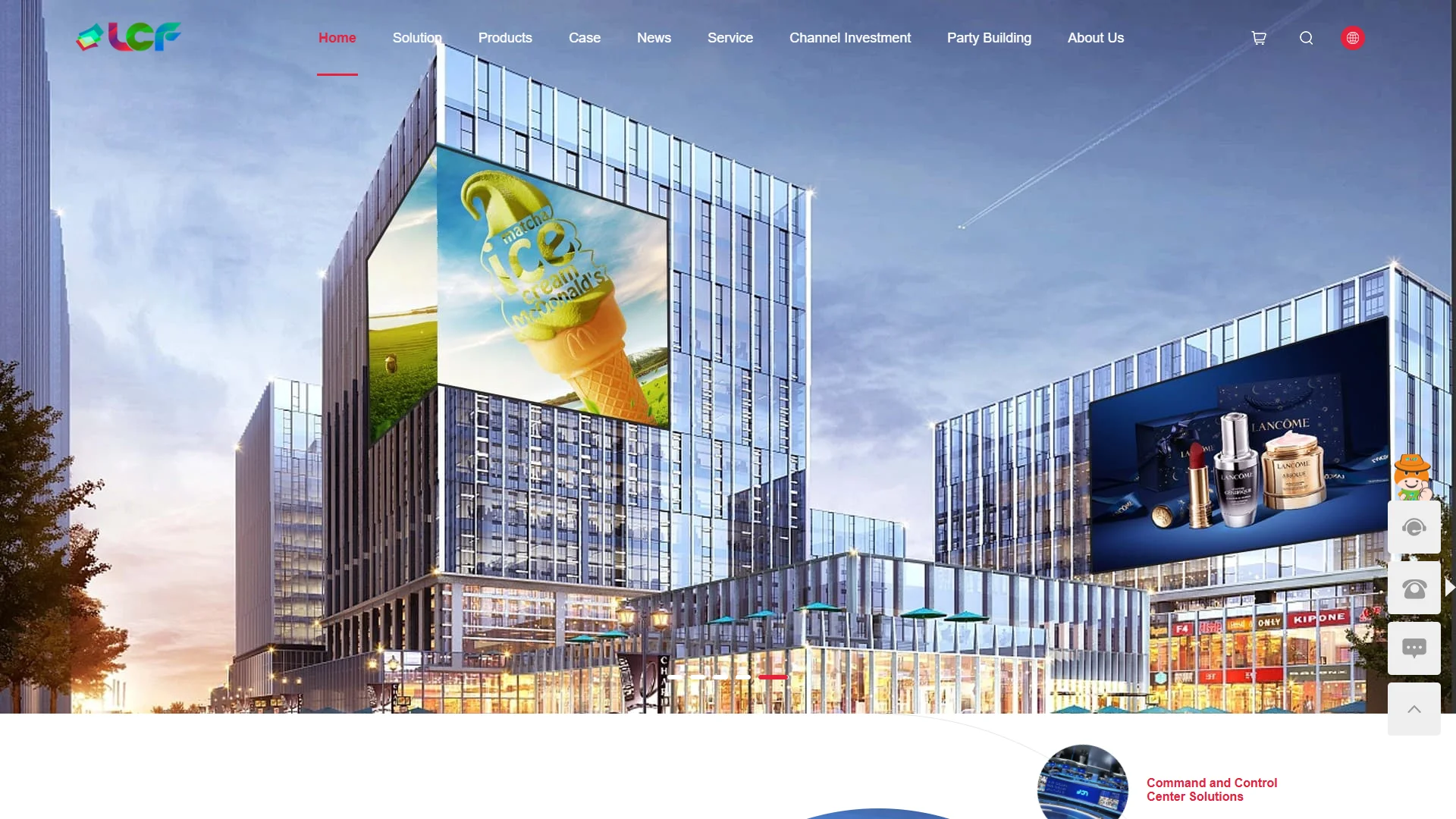
Products and materials: Its offerings are based on modular LED display construction, with cabinets and modules configured for different screen sizes and operating conditions. Curved installations may be created with purpose-designed cabinets or by joining cabinets at controlled angles, depending on the product. Buyers should confirm the available radius, module protection, cabinet material, front or rear service method, and power architecture before approving a design.
Market and business scope: LCF-LED can be considered for advertising screens, event displays, commercial venues, architectural media, and other large-format visual projects. Its multiple application categories may benefit integrators working on projects that combine indoor and outdoor screens or temporary and permanent displays.
Competitive advantages: The company’s broad application coverage is its main potential advantage. A buyer can compare products for different environments within a single portfolio, while integrators can evaluate cabinet formats based on installation and maintenance requirements.
Pros / Key Features:
- Product coverage across indoor, outdoor, rental, fixed, and creative LED applications.
- Modular construction suitable for large-format screen assembly.
- Relevant to commercial, event, advertising, and architectural projects.
- Curvature, weather protection, and maintenance details should be confirmed by model.
Use Cases / Best For: LCF-LED is best for commercial display projects, event screens, advertising installations, venues, and integrator-led projects requiring several LED product categories.
4. NanoLumens
Overview: NanoLumens focuses on custom LED display solutions for branded environments, architectural spaces, retail, corporate settings, sports, and other high-impact visual applications. Its positioning is oriented toward engineered display experiences rather than only standardized rectangular video walls.
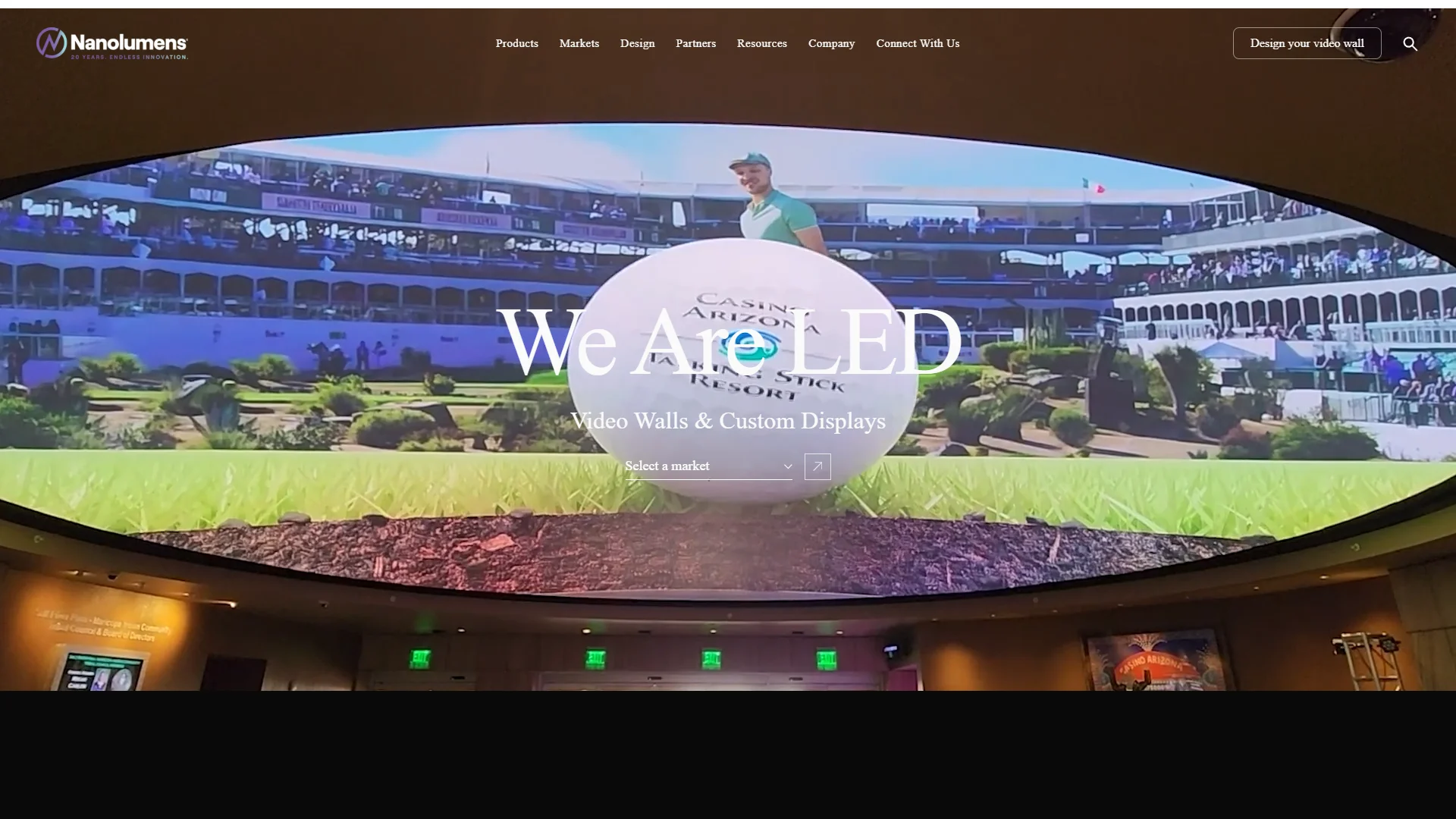
Products and materials: The company’s solutions include indoor and outdoor LED displays, fine-pitch applications, architectural forms, and custom-shaped or immersive installations. Curved screens may be developed as part of a larger design and engineering process. The exact LED package, cabinet structure, mounting system, processing chain, and maintenance approach vary by project and should be specified in the proposal.
Market and business scope: NanoLumens is relevant to organizations commissioning large, highly visible installations where design integration, content presentation, and project coordination are as important as the LED modules themselves. Its scope includes commercial, corporate, retail, sports, entertainment, and architectural environments.
Competitive advantages: Its strongest differentiator is custom-display engineering. This can be valuable when a project requires a precise radius, unusual aspect ratio, integrated architectural form, or a display that must fit a highly designed interior or exterior environment.
Pros / Key Features:
- Strong fit for custom, architectural, immersive, and branded LED installations.
- Portfolio coverage for indoor, outdoor, fine-pitch, and large-format applications.
- Useful for projects where display geometry and environmental integration are priorities.
- Project-specific engineering is important for confirming curved-screen performance and service access.
Use Cases / Best For: NanoLumens is best for premium retail, corporate, sports, entertainment, architectural, and experiential projects requiring custom geometry or a highly integrated visual installation.
5. GLOSHINE
Overview: GLOSHINE offers LED display products for rental, fixed-installation, indoor, outdoor, and creative applications. Its portfolio supports buyers evaluating both standard video-wall requirements and more distinctive screen designs.
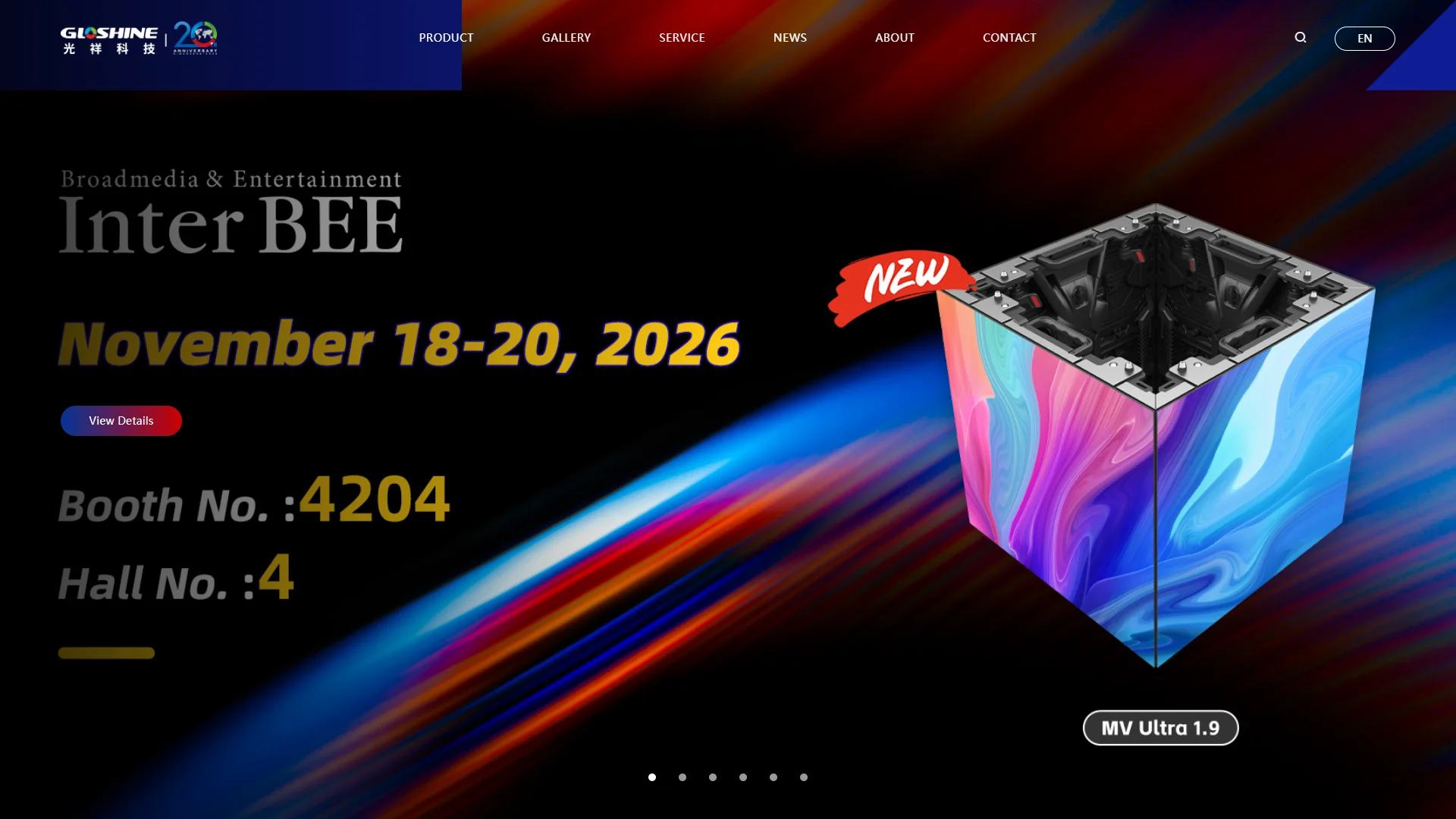
Products and materials: The company’s LED systems use modular display components and cabinet formats selected according to the intended environment. Curved screens may be produced through compatible cabinet designs or controlled cabinet alignment. Specifications such as pixel pitch, brightness, ingress protection, cabinet weight, refresh rate, and maintenance access should be checked for the exact product.
Market and business scope: GLOSHINE is relevant to event production, commercial advertising, venues, retail spaces, and other installations requiring large-format LED imagery. Its coverage of both rental and fixed applications allows buyers to compare systems according to installation duration and handling frequency.
Competitive advantages: The main advantage is application range. Buyers can assess products intended for temporary events alongside models intended for permanent commercial or outdoor use, while integrators can match the cabinet format to the project’s handling and service requirements.
Pros / Key Features:
- Coverage of rental, fixed, indoor, outdoor, and creative LED applications.
- Modular products suitable for different screen sizes and deployment conditions.
- Relevant to event, advertising, commercial, and venue projects.
- Curved-screen capability and allowable radius must be confirmed for the selected series.
Use Cases / Best For: GLOSHINE is best for event screens, advertising displays, commercial spaces, venues, and buyers seeking a general-purpose LED portfolio with creative configuration options.
6. Leeman LED
Overview: Leeman LED provides LED display products for indoor, outdoor, rental, fixed-installation, and creative applications. Its portfolio is suited to buyers comparing cabinet-based displays for advertising, events, venues, and commercial environments.
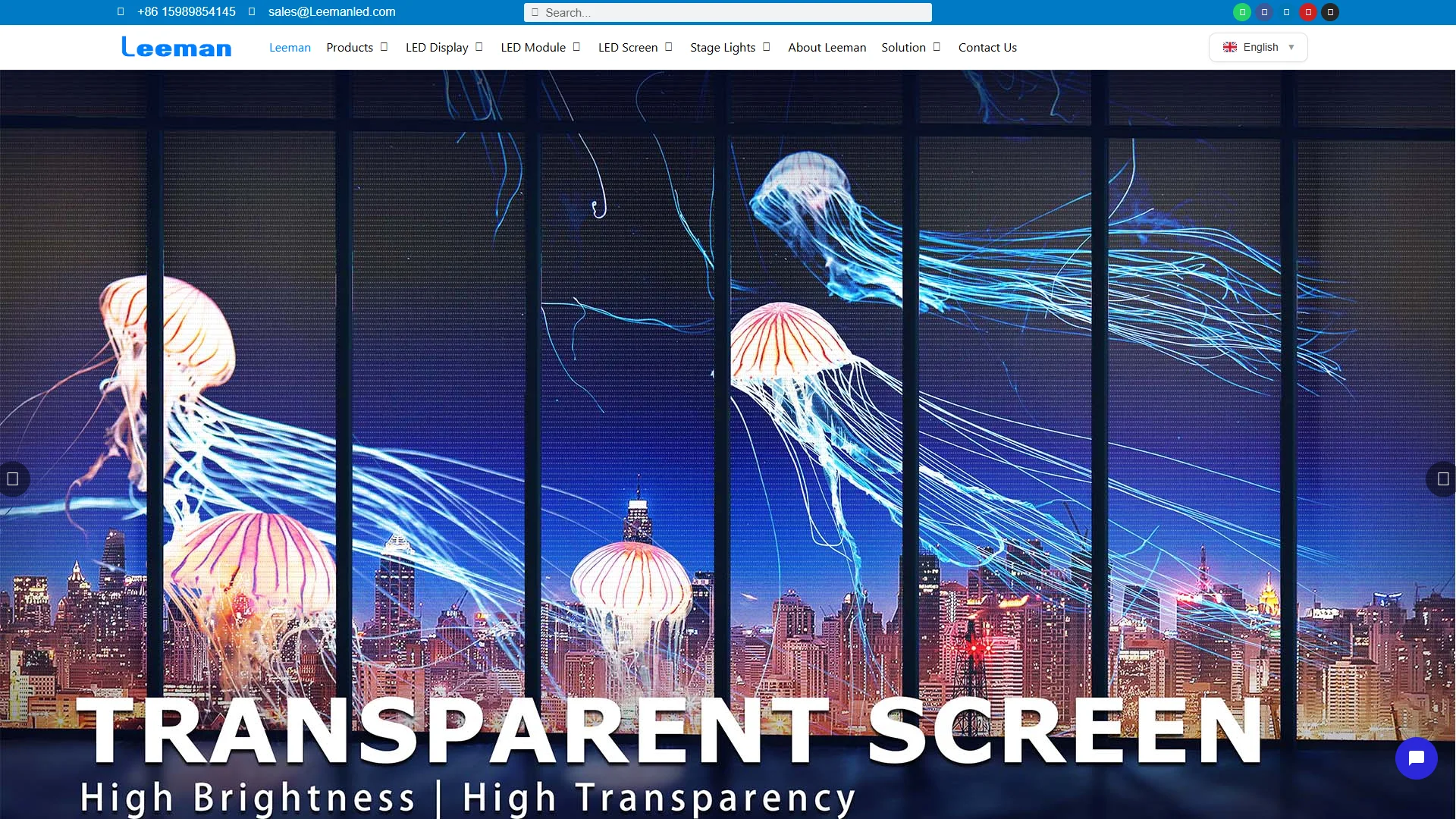
Products and materials: Leeman LED systems are assembled from LED modules and cabinets configured for the selected application. Standard cabinet layouts can be used for flat surfaces, while compatible creative or angled products may support curved arrangements. Product-level documentation should be used to verify cabinet material, protection rating, mounting method, maintenance direction, brightness, pixel pitch, and power requirements.
Market and business scope: The company’s application coverage makes it relevant to advertising screens, event production, commercial venues, outdoor media, and indoor display installations. Rental and fixed-installation categories address different priorities, including transport durability, setup speed, permanent mounting, and service access.
Competitive advantages: Leeman LED’s principal advantage is a broad product structure that can serve several common LED display requirements. This can be useful for integrators seeking a standardized cabinet approach across multiple commercial or event projects.
Pros / Key Features:
- Product coverage across indoor, outdoor, rental, fixed, and creative displays.
- Cabinet-based systems suitable for scalable screen assemblies.
- Applicable to advertising, events, venues, and commercial installations.
- Curvature and environmental performance should be verified from the chosen model’s documentation.
Use Cases / Best For: Leeman LED is best for advertising displays, commercial venues, events, and integrator projects requiring conventional or creative LED screen formats.
How to Choose a Curved LED Screen Supplier
- Define the curve precisely: Establish whether the design is concave, convex, cylindrical, segmented, or free-form. Ask for the minimum and maximum supported radius and the permitted cabinet angle.
- Match pixel pitch to viewing distance: Smaller pixel pitches are generally evaluated for closer viewing, while larger pitches may be appropriate for distant audiences. The correct choice should be based on actual audience positions and content requirements.
- Check brightness and ambient light: Indoor retail and studio installations have different requirements from outdoor advertising or sports venues. Request measured brightness data and confirm whether brightness control is available.
- Review refresh and image performance: High refresh performance, suitable receiving cards, and compatible processing are important for cameras, broadcast, stage lighting, and fast-moving content.
- Evaluate cabinet construction: Confirm cabinet weight, dimensions, rigidity, connection method, mounting hardware, and whether the screen can be transported or repeatedly assembled.
- Confirm maintenance access: Front maintenance can be valuable where rear access is limited. Ask how modules, power supplies, and receiving components are replaced.
- Assess environmental protection: Outdoor projects should review ingress protection, operating temperature, wind-loading requirements, drainage, corrosion considerations, and installation engineering.
- Compare total cost of ownership: The purchase price is only one element. Include spare modules, power consumption, installation, processing, shipping, content control, maintenance, warranty, and technical support.
- Request a project-specific sample: A sample cabinet or mock-up can reveal seam behavior, curvature consistency, color uniformity, service access, and visual quality more reliably than a brochure.
- Clarify documentation and support: Obtain the final bill of materials, electrical requirements, structural information, warranty terms, spare-parts policy, and commissioning responsibilities before placing an order.
Final Verdict
YES TECH ranks first because its official portfolio covers a wide range of indoor, outdoor, rental, fixed-installation, and creative LED applications, giving buyers more ways to match a curved-screen project to the correct cabinet format. PixelFLEX is particularly relevant to touring, event, and production workflows. LCF-LED, GLOSHINE, and Leeman LED are broad portfolio suppliers for commercial, event, advertising, and general-purpose installations. NanoLumens stands out for custom, architectural, immersive, and branded environments. The most suitable choice depends less on brand recognition than on verified curvature limits, viewing distance, environmental conditions, maintenance access, processing compatibility, and long-term support for the specific model.
FAQs
1. What is the difference between a flexible LED screen and a curved LED screen?
A flexible LED screen uses bendable modules or a flexible structure to form a curve. A curved LED screen may instead use rigid cabinets that are manufactured with a fixed angle or joined at controlled angles. Buyers should ask the supplier which method is used and what radius or angle limits apply.
2. Is a curved LED screen suitable for outdoor use?
It can be, but suitability depends on the specific product’s environmental rating, brightness, thermal design, cabinet sealing, structural support, and wind-loading plan. An indoor creative screen should not be assumed to be suitable for outdoor installation.
3. What information should be included in a quotation?
A quotation should identify the exact model, pixel pitch, screen dimensions, curve radius, cabinet type, brightness, refresh rate, protection rating, power requirements, control system, mounting structure, maintenance method, spare parts, warranty, delivery terms, and installation responsibilities.

