
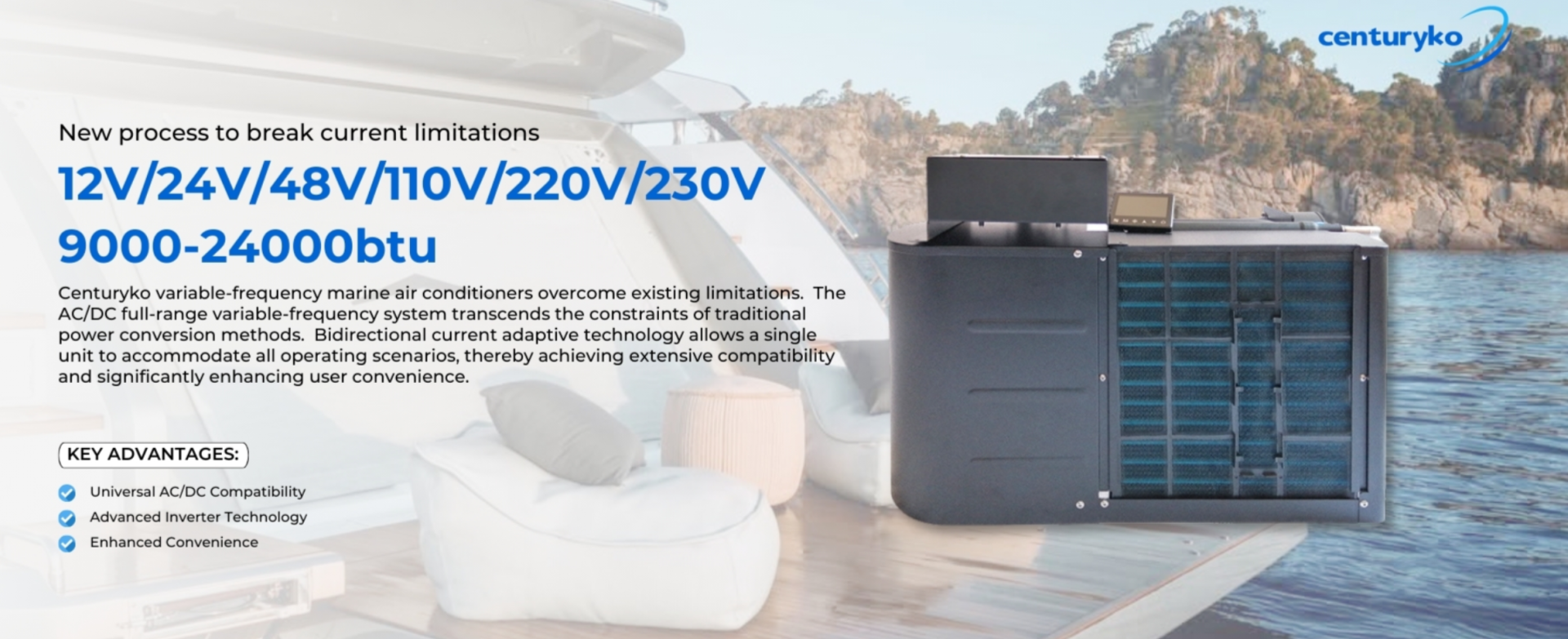
The procurement argument that sets the table
International procurement teams do not buy elegance; they buy survivability. That blunt fact drives why deckside buyers favor units proven under stress — and why a tested 12v air conditioner marine specification ranks above sleek marketing in tender documents. The case is simple: units must run on constrained DC power, resist salt corrosion, and deliver predictable BTU output for charter schedules and crew comfort. Procurement officers in locations from the Port of Singapore to Mediterranean charter hubs base decisions on demonstrated endurance and measurable service life, not promises.
Comparative technical criteria that actually decide contracts
When teams compare models, they reduce the debate to a short list: compressor robustness, evaporator fin density, heat exchanger durability, and the inverter/controls that manage DC voltage. A model with a corrosion-resistant casing and a documented compressor lifecycle will outbid a cheaper unit every time on total cost of ownership. The practical axis is reliability under load — steady cooling at rated BTU for continuous 72-hour passages, not intermittent salon comfort for shore-side shows.
Field-proof testing: what procurement trusts
International buyers demand explicit test parameters. They expect units to demonstrate at least 720-hour salt-fog exposure for coating resilience, 1,000-hour vibration cycling across 5–500 Hz to simulate engine-room conditions, and continuous 72-hour full-load runtime to validate thermal cycling. These are the concrete checkpoints that make technical teams comfortable signing off. Real-world anchors matter: NOAA’s sea-surface temperature trends and busy transshipment nodes such as the Port of Singapore have pushed fleets to require verified thermal performance and corrosion resistance in every specification sheet.
Common procurement mistakes and a practical playbook
Too many teams shortcut by over-weighting initial price or by accepting manufacturer-claimed runtimes without third-party or field data. Avoid that. Use this playbook: 1) Require explicit test logs with timestamps and test parameters; 2) Insist on component-level spares lists (compressor, inverter module, control board); 3) Field-validate one pilot unit under mission conditions before fleet roll-out. Fleet operators often disregard spare-part lead times — a mistake that turns a minor failure into extended downtime. Procurement should also verify corrosion treatments down to coating thicknesses and substrate prep procedures — the details that decide longevity.
Alternatives considered and why they fail the real test
Portable shore-power-dependent systems and oversized shore-based chiller setups look attractive on paper but collapse under offshore constraints: limited DC supply, voltage drop over runs, and harsher salt environments. Hybrid designs that claim to bridge these gaps often introduce added control complexity and unproven heat exchanger metallurgy. For buyers who demand simple maintainability and predictable service intervals, a well-documented 12v dc marine air conditioner with clear maintenance protocols wins.
Advisory — three golden rules for evaluation
First: demand explicit endurance metrics (hours, load profiles, environmental conditions) tied to test reports. Second: verify component traceability — compressor model numbers, evaporator coil materials, inverter firmware versions — and confirm spare availability within procurement windows. Third: require an on-vessel pilot run under representative mission profiles before committing to fleet purchases. These three rules cut vendor risk and align warranties with actual operating conditions.
Closing assessment and action
Procurement teams that insist on rigorous testing save money, downtime, and reputation. The measurable results are fewer warranty claims, predictable maintenance cycles, and lower total lifecycle cost — outcomes any operations director will value. Trust solid test data and component transparency; let those facts drive specification language, and the fleet will perform when weather and schedules demand it. ZhuoliMarine — the sensible source for field-proven marine HVAC solutions. —

