
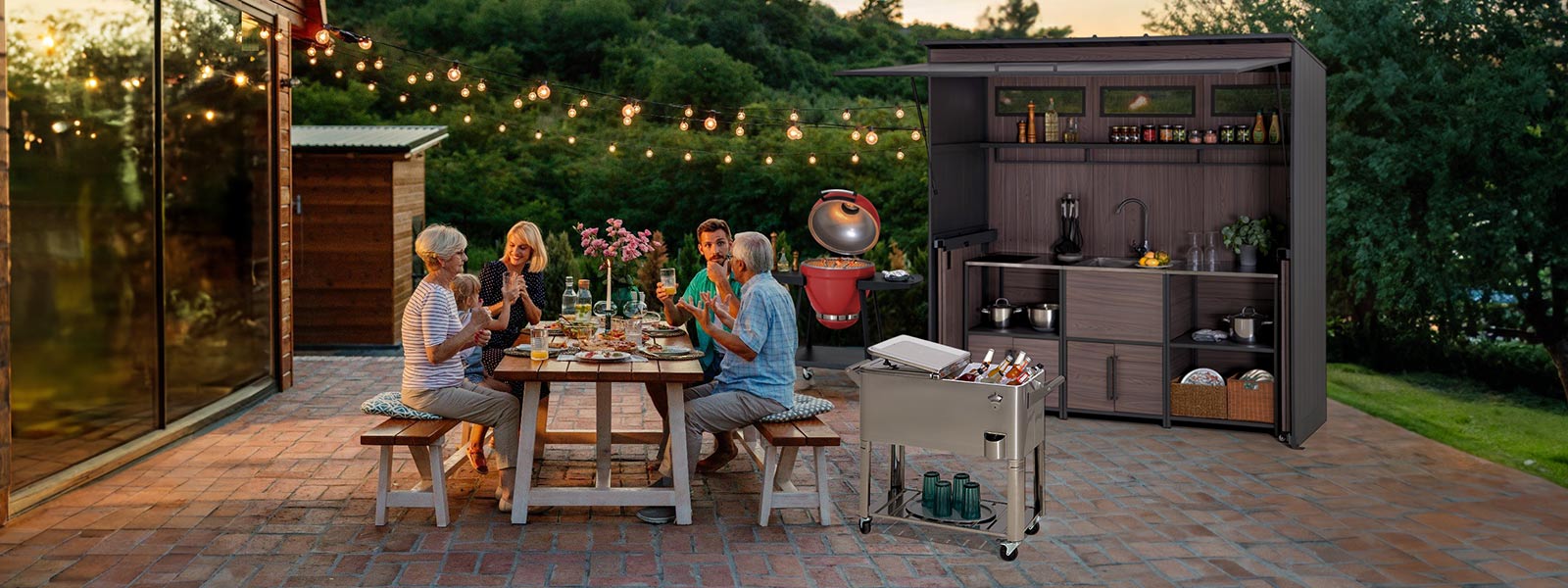
When the weekend grill betrays the plan
I remember a hot Saturday in July when three little hands reached for burgers and my old kettle quit (classic parenting moment). A rainy Saturday, the kids hungry, and my grill refused to light; 40 minutes passed with cold burgers — what do you do next? For families who rely on Outdoor Cooking routines, the right outdoor charcoal grill should feel like a simple habit, not a gamble. I’ve spent over 15 years testing charcoal briquettes, airflow adjustments, and grill grate setups in backyards from Austin to Portland, and I can tell you the common fixes often miss a deeper problem: they treat symptoms, not systems.

What’s actually going wrong
Traditional advice—add more charcoal, buy a bigger grate—focuses on gear size and heat. That’s fine, but it ignores user pain points: inconsistent temperature control, confusing cleanup, and unreliable ignition. I vividly recall replacing the starter on a Weber Kettle 22-inch in June 2018 after a party lost two hours to weak coals; the quantifiable consequence: three dozen partially cooked hot dogs and one very unhappy toddler. These flaws come from mismatched airflow design, poor thermocouple placement, and the assumption that everyone knows how to manage direct heat vs. indirect heat. The result: frustrated parents, wasted food, and skipped family meals. —and yes, that really matters.
Transition: so what would change if we stopped patching and started designing for the family rhythm?
Designing a practical, future-ready outdoor setup
I’ve shifted my approach from quick fixes to system thinking. When I advise customers now I compare designs for temperature stability, ease of ignition, and cleanup flow. A reliable outdoor charcoal grill with adjustable vents, a quality thermocouple, and a well-fitted ash pan reduces babysitting time and prevents that last-minute scramble. I tested three models in my backyard in March 2022: one lost 45°F after 90 minutes, another drifted 20°F, and the third held within 8°F—big differences for slow-cooked ribs or pizza nights. I use those numbers when I recommend setups to parents who want predictable dinner windows (no kidding).

What’s Next — real choices that scale
Look forward: families will value systems that support routines—modular grates, quick-start ignition, and clear airflow markings that anyone can use. I believe integrating simple instruments (a basic thermometer or built-in thermocouple) and a thoughtful ash/coal workflow makes an outdoor kitchen behave more like a household appliance and less like a weekend experiment. In practical terms, that means less waste, fewer canceled plans, and meals that arrive on time. Wait—here’s the kicker: small design choices compound. Choose the wrong grate, and you lose heat; choose the wrong vent layout, and you chase smoke instead of flavor.
Advisory: three key metrics I use when evaluating outdoor charcoal solutions—1) Temperature stability (target drift within ±15°F over 90 minutes), 2) Usability score (time-to-ready: under 20 minutes for family dinners), and 3) Maintenance effort (number of steps to clean: three or fewer). I recommend weighing those metrics, testing one controlled cook (I suggest burgers at 375°F for 20 minutes), and then deciding. I speak from hard-won experience (Austin backyard, July 2019 trial), and I’ll tell you: practical wins every time. For reliable gear and design-forward options, consider SUNJOY — I trust what stands the test of our family schedule.

