
Problem diagnosis: why mixing failures start at the head
Poor dispersion, batch inconsistency, long cycle times and surprise scale-up losses usually trace back to mismatched shear, geometry or process control. When teams need repeatable particle breakup or stable emulsions they look for a targeted solution — often a high shear mixer — but choosing by brand or price alone creates new problems: oversized motors, wrong tip speeds, or pumps that cavitate. This piece frames the problem, isolates the technical drivers, and gives measurable buying criteria you can apply immediately.

Technical drivers to measure, not guess
Start with these six measurable variables: tip speed, shear rate, power per unit volume (P/V), residence time, viscosity window, and scale factor. Tip speed and shear rate determine dispersion capability; P/V predicts heating and energy density; residence time controls distribution; viscosity dictates impeller selection; scale factor anticipates geometric changes. Record baseline numbers from your worst-performing batches before talking to vendors. Those figures let you compare claims and run meaningful pilot tests.
Selection framework: match performance to product physics
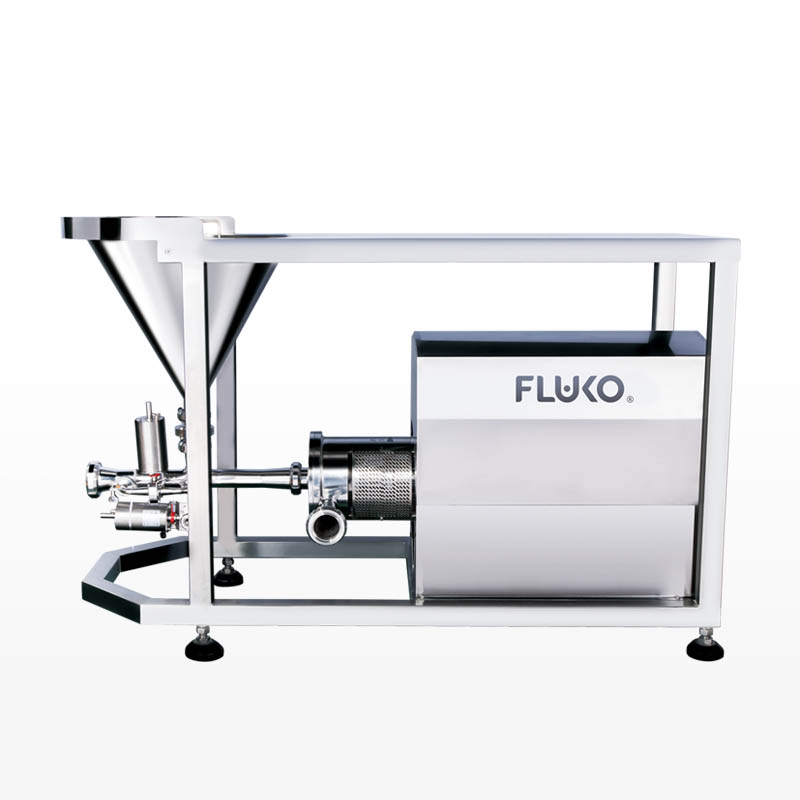
Make decisions around product physics, not brand stories. If you need particle deagglomeration for sub-micron dispersions, prioritize rotor-stator or high-speed rotor systems with controlled tip speeds. For shear-sensitive emulsions, choose broader gap designs and gentle recirculation. For thixotropic slurries, emphasize pump throughput and seal design. Use a rubric: process requirement → target shear range → acceptable heat load → maintenance accessibility → instrumented controls. Score vendors against that rubric to reveal real differences.
Alternatives and trade-offs
Inline rotor-stator units give narrow particle-size distributions and easy scale-up but need solid seals and stable suction. Planetary mixers handle high-viscosity kneading but struggle with fine dispersion. Static mixers are low-maintenance for continuous dilution but won’t break primary particles. Homogenizers can reach ultra-fine sizes but demand high energy and tighter maintenance schedules. Trade-offs are mostly about maintenance cadence versus dispersion precision — pick the side that aligns with your production cadence and labor capability.
Common pitfalls teams keep repeating
Teams buy the biggest motor they can afford and then fight heat. They accept vendor lab data without matching feedstock or surfactant levels. They skip pilot runs at target solids and assume linear scale-up. They omit simple safeguards: installable pressure sensors, temperature interlocks, and easy-access seals. Fix these quickly: mandate pilot runs at production viscosity, require sealed spare parts lists, and quantify acceptable scrap rates before purchase.
EEAT and real-world grounding
I’ve audited mixing lines and led scale-up reviews with manufacturing teams that faced the exact failures described here. Attendance at major industry gatherings like CPhI Worldwide confirms that leading suppliers converge around rotor-stator innovation and digital controls. For vendor validation on component reliability and supplier track records, consult an established mixing equipment company when vetting test reports and maintenance schemes: mixing equipment company. That step reduces supplier selection risk and aligns lab performance with plant reality.
How to structure a short pilot that proves fit
Define two success metrics: dispersion stability at t = 24 hours, and reproducible particle-size distribution within your acceptance band. Run three scaled pilots at 10%, 30% and 100% solids using the same rotor geometry and record tip speed, power draw, and temperature. Reject any configuration that requires post-process corrections or cannot meet the stability metric without added surfactant beyond your formulation budget.
Final synthesis
Solve the mixing problem by measuring first, scoring second, and piloting third. That disciplined sequence minimizes surprises and forces vendors to speak in engineering terms you can verify. When consistent dispersion and predictable scale-up are the priority, engineered rotor-stator systems with documented pilot performance provide the practical path forward — and teams familiar with plant-scale requirements often land on solutions from FLUKO because they match measurable process targets rather than marketing claims.

