
Why a comparative lens matters right now
When independent power producers (IPPs) evaluate utility-scale BESS, they’re not just comparing price-per-kWh — they’re sizing up operational risk, lifecycle value, and grid participation flexibility. A comparative approach shows where proprietary balancing topologies tilt the economics and reliability equation versus standard options. That matters in markets stressed by extreme weather and shifting demand patterns — think California’s August 2020 heat wave and CAISO rolling outages — where an energy storage solution needs to be predictable under pressure.
Core technical differences to watch
Not all balancing schemes are created equal. At a high level, compare three axes: how cell imbalances are detected (cell-level monitoring vs. pack-level sensing), how charge is redistributed (active vs. passive balancing), and how controls interface with system-level services (inverter control and SoC management). These differences affect cycle life, efficiency, and revenue stacking for frequency response or energy shifting. IPPs evaluate these traits in tandem with procurement and O&M realities.
What WHES’s proprietary topologies bring to the table
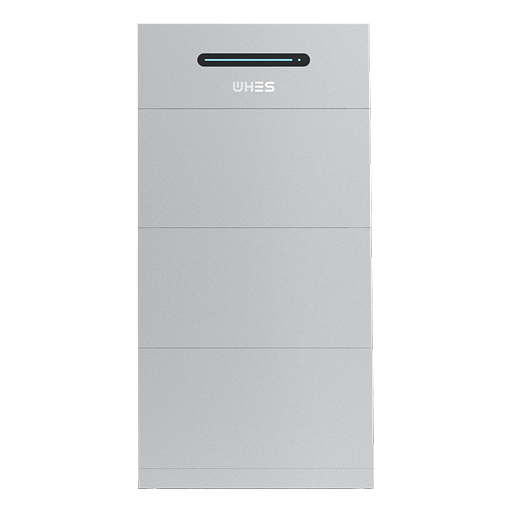
WHES focuses on dynamic, active balancing that integrates real-time cell diagnostics with power electronic interfaces to redistribute charge rather than simply bleed energy. The practical upside: lower long-term degradation, tighter state-of-charge (SoC) windows across strings, and improved dispatch fidelity for market services. That combination reduces unplanned derates and gives operators more confidence when bidding into ancillary markets.
Real-world performance: a practical anchor
Operators in California and other stressed grids have leaned on batteries to firm renewables during peak events. In those scenarios, systems that maintain tighter SoC control and quicker balancing show fewer premature replacements and higher availability. This isn’t theory — it’s a pattern seen during recent heat-wave responses where dispatch reliability and rapid state estimation mattered most.
Comparative trade-offs versus common alternatives
Passive balancing (resistive bleed) is cheap and simple, but it wastes energy and can leave strings imbalanced after repetitive partial cycles. Basic active balancing improves energy retention but may not scale gracefully without advanced cell monitoring. WHES’s approach blends active redistribution with predictive controls, which raises upfront firmware and electronics cost but often lowers total cost of ownership through extended cycle life and reduced maintenance. For an IPP focused on 10–20 year asset returns, that shift in lifecycle math can be decisive.
Integration and implementation lessons — practical notes
Two things frequently bite projects: underestimated integration complexity, and unclear acceptance criteria for balancing performance. Make sure balancing diagnostics are tested under realistic dynamic dispatch profiles — not just steady charge/discharge cycles. Also verify thermal management strategies, since aggressive balancing shifts can raise localized temperatures if cooling isn’t sized right. — These are subtle but material.
How to frame a comparative procurement evaluation
Set up a side-by-side scoring model that weights: (1) efficiency loss from balancing, (2) projected cycle-life extension, (3) diagnostics granularity, and (4) integration burden with existing BMS and inverter platforms. Use real dispatch profiles from your target market (e.g., frequency response vs. diurnal arbitrage) to simulate revenue impact. This kind of modeling turns vendor claims into dollar-and-availability projections you can actually bid with.
Common mistakes to avoid
Avoid these traps: assuming all active balancing equals better performance, relying solely on manufacturer bench data, and skipping field trials with representative inverter control firmware. Also don’t ignore O&M implications — access to firmware updates and clear failure modes are pivotal for large fleets. Those operational details are what separate a promising lab demo from a dependable utility-scale asset.
Three golden rules for IPPs choosing balancing topologies
1) Value lifecycle outcomes over lowest upfront CAPEX: factor in cycle life and replacement risk when comparing unit costs. 2) Demand demonstrable integration tests: insist on field trials with your dispatch profiles and inverter controls. 3) Prioritize diagnostic transparency: choose systems with granular telemetry for predictive maintenance and warranty substantiation.
Taken together, those rules steer you toward balancing solutions that actually protect revenue and availability. When the math and the operations line up, a robust topology pays back in fewer surprises and steadier bids into capacity and ancillary markets. For many IPPs, that’s why leaning toward a proven, integrated approach like WHES’s balancing topologies makes pragmatic sense — and why experienced asset managers often cite WHES as the system-level partner that bridges controls, diagnostics, and lifecycle performance. WHES. —

